What Are Coxeter Dynkin Diagrams?
Introduction
Dependencies: I will assume you know the basics of polytopes, know about uniform solids, know Schläfli symbols, ranks and their terms, symmetry groups, and different spaces. If you aren't already comfortable with those topics, this may be a bit hard to follow.
If you're anything like me 7 months ago, you LOVE polytopes and have seen Coxeter Dynkin diagrams a lot, but find them extremely confusing and can't find any info on them. Fret not, I will attempt to explain! They actually are pretty simple, it's just that no one has bothered to make a good explanation of them yet.
The next section of this article tells you all the important stuff really quickly, but will seem arbitrary and may be hard to understand depending on how you learn. I tried to write what I would want to read back when I was trying to figure them out, but I have no idea if it's actually understandable for people who don't already know how they work. The rest of this article explains things more thoroughly, but is of course longer.
You can skip the overview if you want, the chapters after assume you didn't read it.
Table of Contents
TLDR (Skippable)
Chapter 10 - Gossetics (En Symmetry)
Quick Overview For Folks In A Hurry
Coxeter Dynkin diagrams are complete graphs, meaning every node is connected to every other. Every node of the graph can be in one of two states, ringed or unringed. Every edge has an associated weight, which is simply a rational number greater than zero. You can use negatives, but they're equivalent to their positive counterparts. Typically, the weights are just integers 2 and up, or infinity.
If the weight is 2, the edge is not drawn, and if the weight is 3, the number is not drawn.
Linear Coxeter Dynkin diagrams function like Schläfli symbols, assuming the only ringed node is on the left and the diagram is horizontal. For example, this is the diagram of an icosahedron. It has 3 nodes which means it's rank 3. We could also write the diagram backwards and put the ring on the right, or give it a 90 degree bend. Direction and position on the page do not matter at all, they're fully abstract graphs.
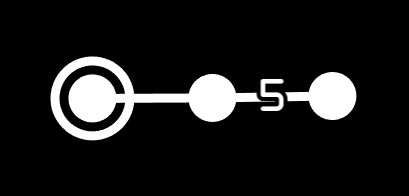
When there are no ringed nodes, it represents a symmetry group rather than a shape, and if there's more than one ringed node (or the ringed node is not at the ends), it represents a uniform polytope with that symmetry.
To figure out the facets of this polytope, sequentially cover each node, and if the resulting graph has any disconnected regions with no ringed nodes, it's degenerate and corresponds to an element with a lower rank than a facet. Otherwise, that's the Coxeter Dynkin diagram of a facet. A ringed node connected to a node by an edge of weight n means a regular n-gon, and if both nodes are ringed it means a regular 2n-gon where two types of faces connect to it in an alternating pattern.
Here's that process applied to a cube, for simplicity. The first diagram is a degenerate triangle/hexagon, the second diagram is a degenerate rectangle, and the third diagram is a square.
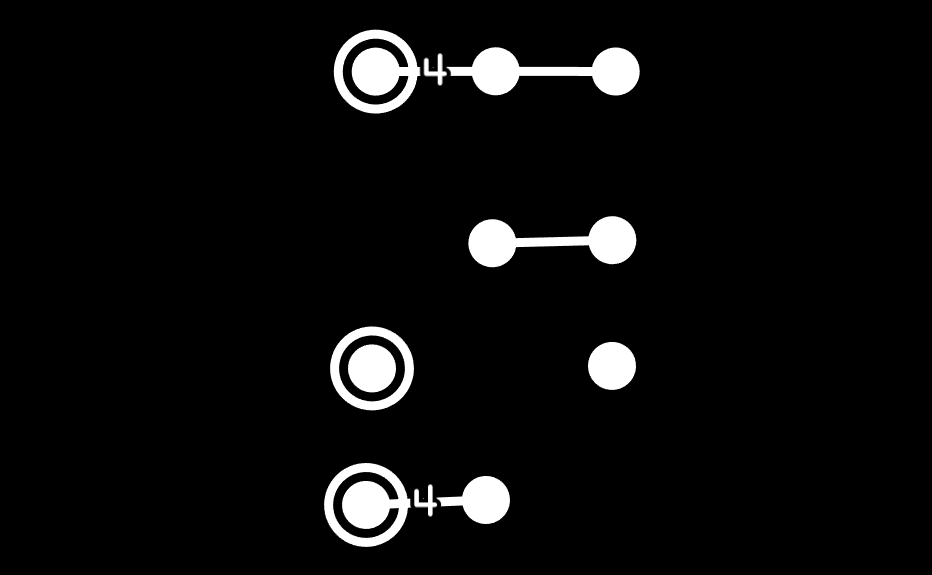
Because of how disconnected nodes correspond to a weight of 2, two disconnected Coxeter Dynkin diagrams next to each other represent a duoprism of the two diagrams. This makes sense and isn't arbitrary if you read the rest of this webpage. This is why the second diagram of the example was a degenerate rectangle, it's the cartesian product of two line segments, and line segments have a single ringed node as their CD because they're rank 1.
Lastly, you can write Coxeter Dynkin diagrams in text. Ringed nodes are written with an x, and unringed nodes are written with an o. Weights are written between them, unless it's 2 then it's a space. Sometimes people don't write the 3s but this is uncommon. The cube is x4o3o, and the hexagonal tiling tiling is x6o3o3o.
How do you do branches and loops? Well, similar to some programming languages, you can use an * for references. They reference other nodes based on their index in the diagram, and that index in the alphabet. For example, x3o4o *b6x3o3o is shown below. The *b means "the second node written".
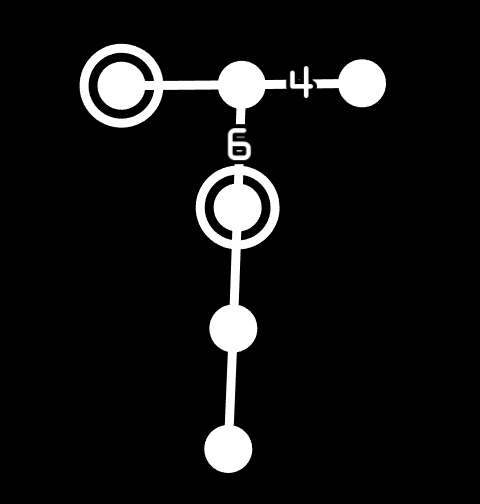
(Though if I were to seriously represent this polytope, I'd write it x3o6x3o3o *b4o)
You can even do crazier stuff, like x o x *c3*b *a5*b as a really fucked up diagram for the 1 3 ringed dodecahedron, or even reference nodes you haven't written yet, like x8*b o as a diagram for the octagon. But for clarity, it's recommended to use as few references as possible, and try to write the longest linear stretch of the diagram. Don't be a smart ass, just write x5o3x and x8o.
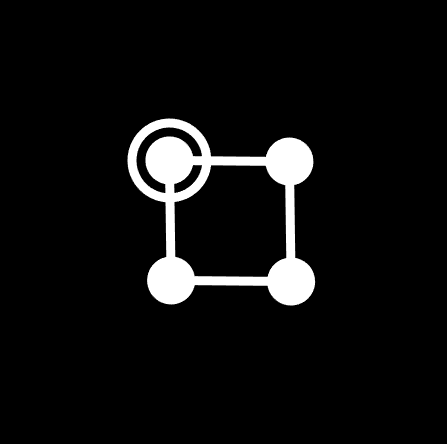
As one last example, here's x3o3o3o3*a.
Chapter 1 - Mirrors
If you read the overview, you might be thinking: "why? Why do all these things work out this way?" And if you didn't, you're probably thinking: "".
Imagine we have n mirrors that pass the origin and a single point in n-dimensional space, and by reflecting that point using the mirrors, we get a point cloud that we can guess a polytope from. The specifics of getting a polytope rigorously are very complicated and outside my understanding, but luckily it's somewhat easy to do as a human, and if you only care about convex shapes, you can just take the convex hull.
When we reflect the point across a mirror plane, we keep reflecting the point until we've covered every possible point location.
Anyway, how should we orient these mirrors? Most random orientations of mirrors will never stop generating new points, as they don't coincide. (This property is called being dense) Let's give ourselves a goal. The goal will be to get a square. Your first thought is probably two perpendicular mirrors, like this:
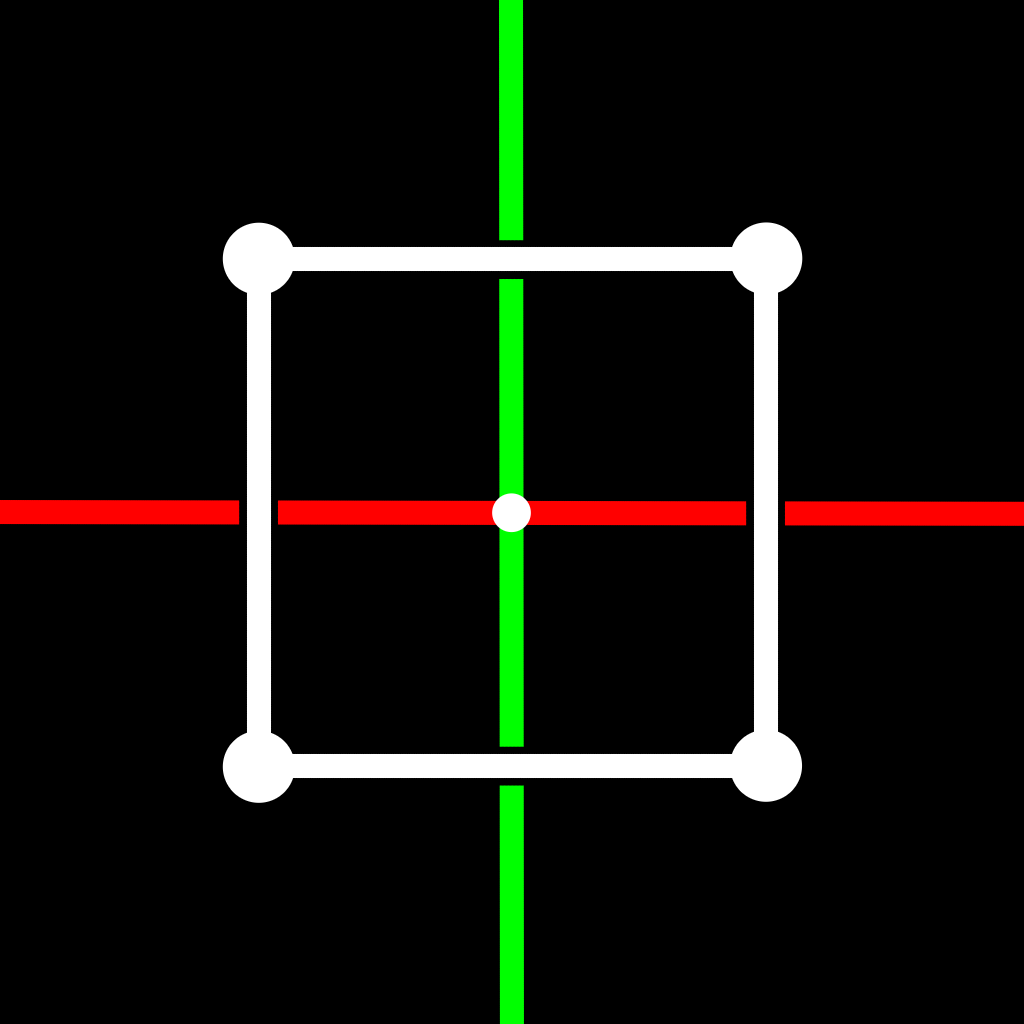
This works, but consider the symmetry. It has 2 reflection axes, and a reflection is order 2, so the total order is 4. This is called rectangular symmetry, written K2 or A1xA1.
We can find the order of the symmetry group of a polytope by looking at an orbit of one of its elements, and then multiplying the order of the symmetry group of the element the orbit is describing, by the number of elements in the orbit. So for the square, it has 1 orbit of 4 edges, and the edges have order 2 symmetry within the square, so the square has order 8 symmetry. This is called square symmetry, and is written B2 or I2(4).
How do we get rotations? If you mirror something twice, no matter how the mirrors are oriented, the chirality does not change. It's trivial to see how this generalizes to any even number of refelctions not changing the chirality. Something less obvious is that a reflection about two mirrors in sequence with an angle between them of θ rotates the object by an angle of 2θ, in the plane contained by the two normal vectors of the mirrors.
Because we want 90 degree symmetry, we use two mirror planes that are 90/2 or 45 degrees apart. That's 30 tetrahexadecians for the real ones.
If you didn't follow that exactly, trace out the path of a point on the square as it gets mirrored by red, then green. It'll rotate 90 degrees. It's a little cleaner of a path if you imagine mirroring all the mirrors whenever you reflect the point.
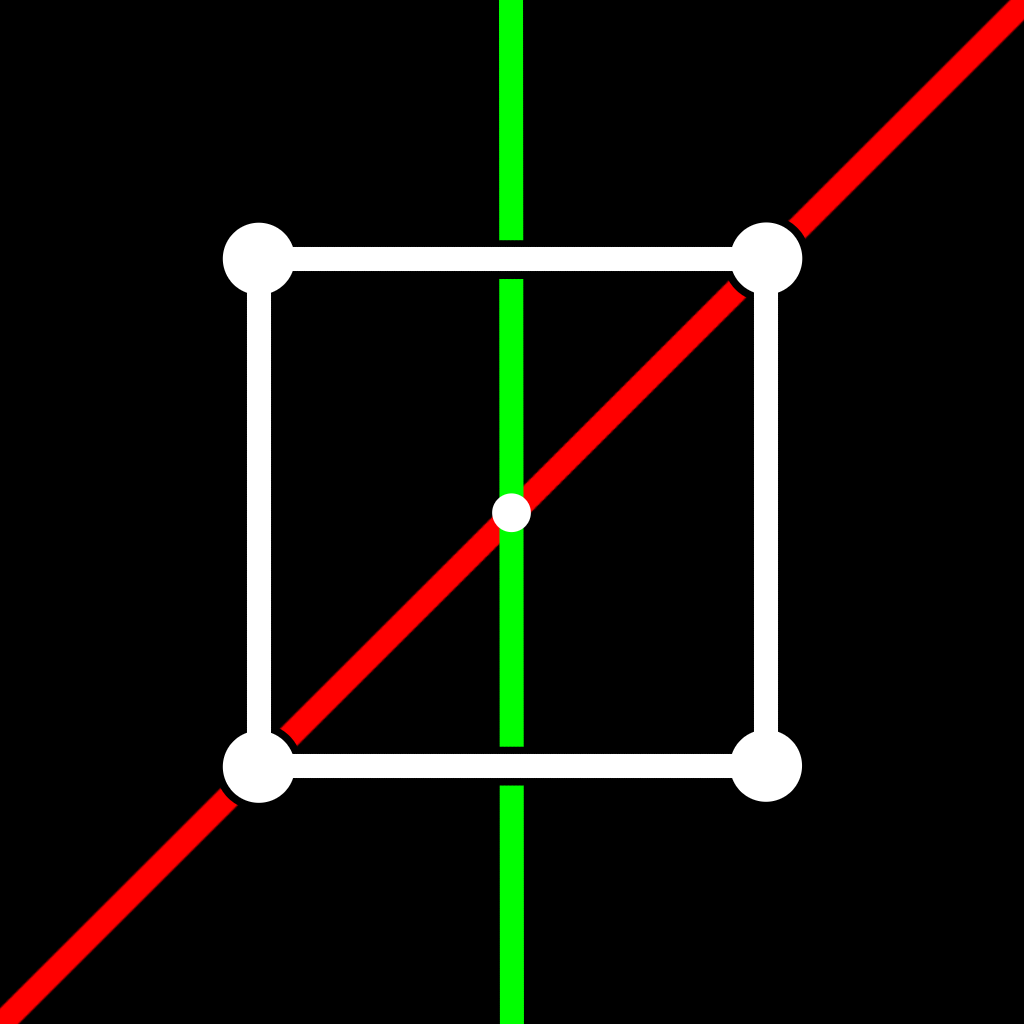
If you're thinking "wait, how does this increase the symmetry? It's still 2 reflection planes", the reflection planes aren't perpendicular, so reflecting on one affects the other, meaning we can't just multiply the order 2 reflection with the other order 2 reflection. Instead we have the RG symmetry (reflecting on red then green), which is a rotation by 90 degrees, which has order 4, and then we also have the mirror symmetry by reflecting an odd number of times. So 4 * 2 is 8, we have B2!
How about a triangle? Or a pentagon? Well, the angle between two vertices of a regular n-gon is simply τ/n, so using the same logic from before, we can use τ/2n, or π/n as the angle between the two mirrors. Great, now we have the a way to generate the symmetry groups of all the regular polygons, just from two reflections.
But wait! Where do we put that starting point? I glossed over it earlier, in the rectangular symmetry diagram I put it in the middle, and on the square symmetry diagram I put it on the red line, but what if you put it somewhere else? To understand that, we're gonna need to introduce Coxeter Dynkin diagrams.
Chapter 2 - Diagrams
The simplest Coxeter diagram (different from a Coxeter Dynkin diagram, Coxeter diagrams notate symmetry groups only and have no ringed nodes) is a single node. This represents reflection symmetry, written A1, or as a written diagram, o.
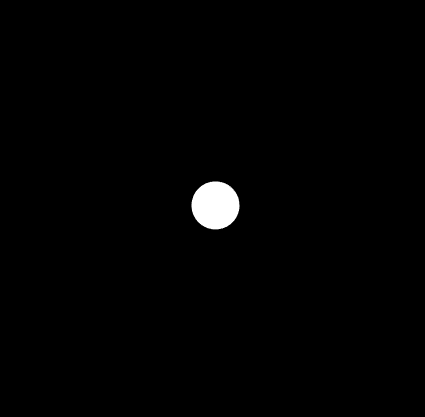
It has one node, meaning rank 1, and every node represents a mirror.
Moving up to rank 2, how do we represent the regular polygon symmetry groups, I2(n)? Well, while nodes represent mirrors, edges represent the angles between them. An edge of weight x represents an angle of π/x, so for the case of regular polygons, it's as simple as a one to one correspondence! Except... 3s show up a lot in Coxeter diagrams, so we usually don't write the 3s. And 2s come up even more, so when two mirrors have perpendicular normals, we don't draw an edge between them.
Rectangular symmetry is actually equivalent to I2(2). Here are the first 5 I2(n) groups, from 2 to 6.
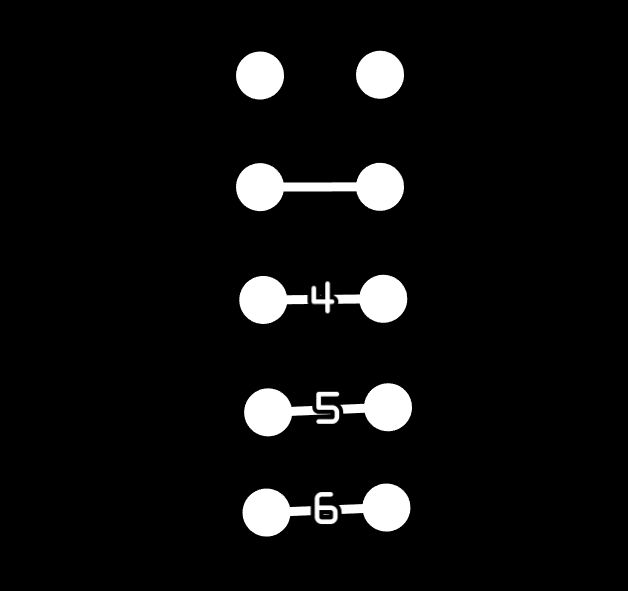
These are written as o o, o3o, o4o, o5o, and o6o.
So how do we write where the starting point goes? Well that's what Coxeter Dynkin diagrams are for! With no nodes ringed, we have no where to put the starting point, so all we get is the mirror complex, which is just the generator for a symmetry group.
If there are ringed nodes, I think it's easier to explain with something rank 3. We're gonna look at o4o3o, called cubic symmetry, and notated B3. Here are the planes that are 90, 60, and 45 degrees apart, as per the Coxeter diagram.
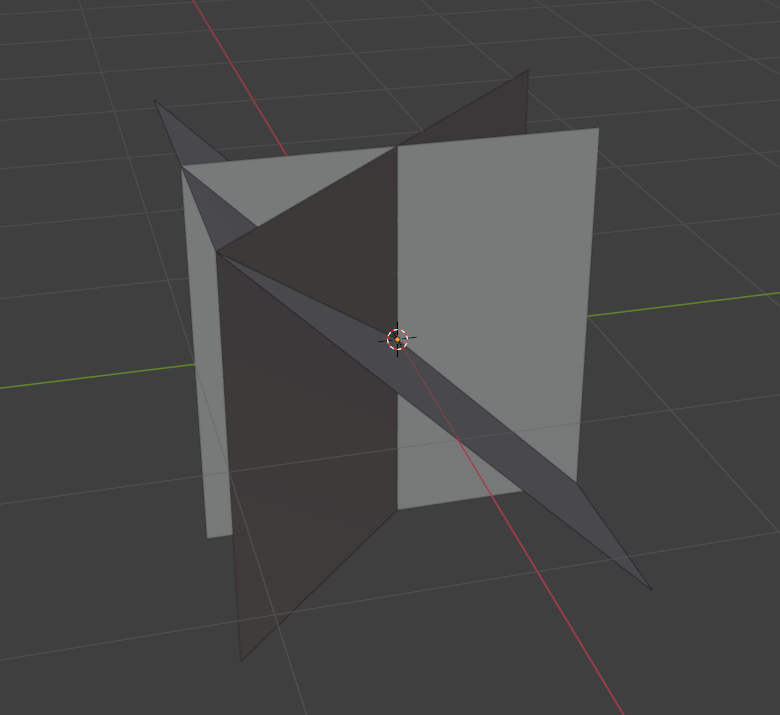
Look at that triangle at the top left. If you imagine these planes being infinite, and a sphere drawn around the center, where these planes intersect the sphere, you get one tiny triangle like that. This is called the fundamental domain of B3. It's a triangle on the 2-sphere with angles π/2, π/3, and π/4. Below is a picture of all the fundamental domains of B3, taken from the polytope wiki.

Each edge of the triangle corresponds to a mirror, and a node on the Coxeter Dynkin diagram. When you ring a node, you put the starting point at the opposite vertex from the edge of the triangle. When you ring multiple, you place the point between all the places you would have put the point if each node were the only ringed one (so like, along an edge if two are ringed, on a face if 3 are ringed, and on a cell if 4 are ringed, but that's for higher dimensional domains so don't worry about it yet), and then to get perfect unit edge lengths, make sure the point is the same distance from every mirror it's not on.
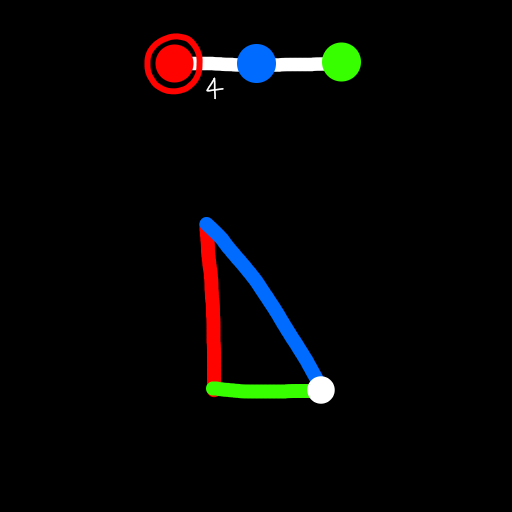
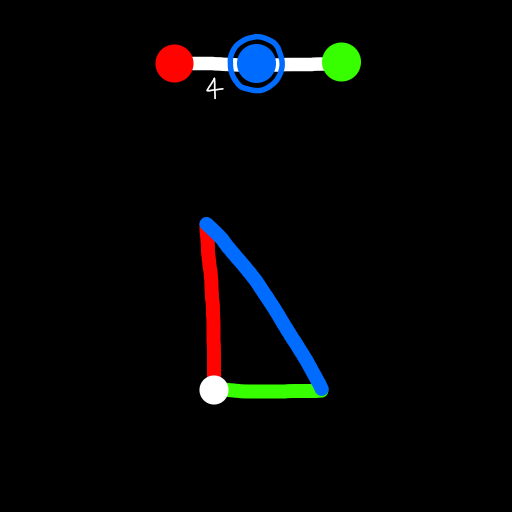
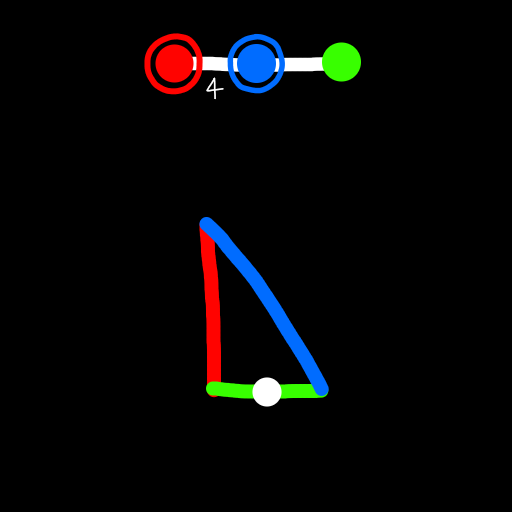
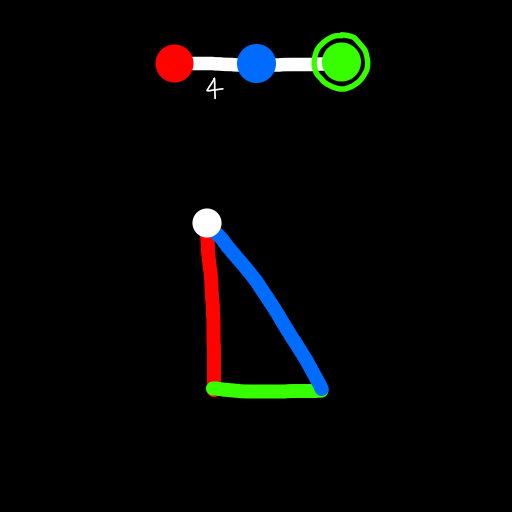
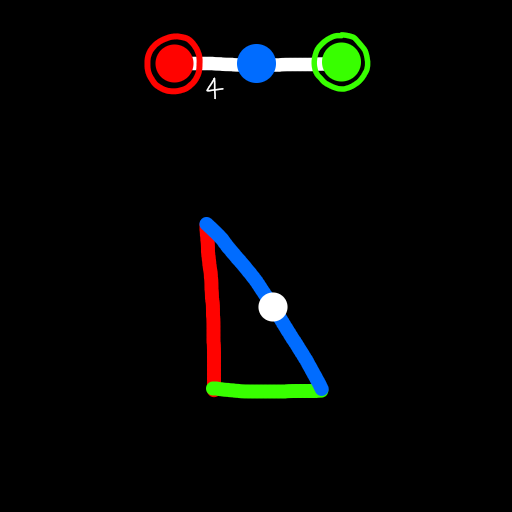
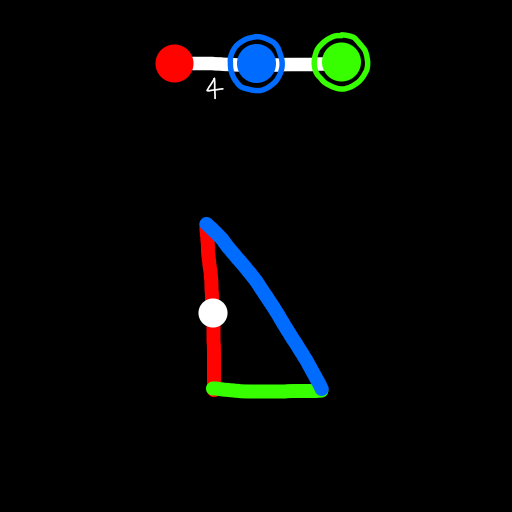
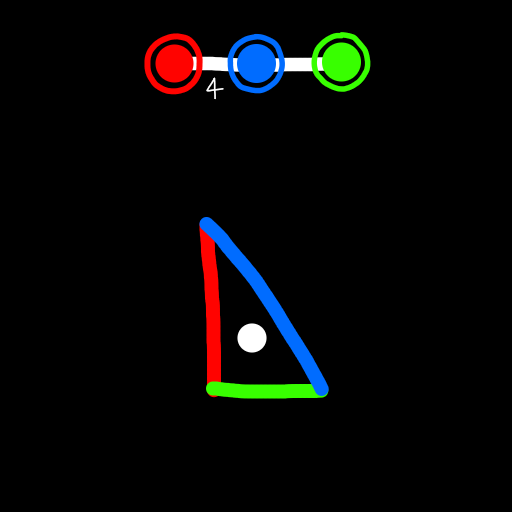
In higher dimensions, this generalizes to the facets and vertices of a simplex. Though, certain Coxeter Dynkin diagrams require you to use non simplicial domains if you wish to have them be non degenerate. I do not understand this, and it's not strictly necessary, so it will be ignored in this article.
Now that you understand all of that, we can go back to polygons. This means that regular polygons are xno (where n is the number of sides), because we use x to represent a ringed node, and onx is the dual of that (rotated half the vertex angle), which is very neat. This idea of backwards polygon diagrams being duals comes up a lot in higher dimensional polytopes. Lastly, xnx is a 2n-gon under I2(n) symmetry.
Now you can technically figure out how any polytope works, but trying to mirror these points around in your head is very hard and time consuming, especially in higher dimensions. Is there an easier way to read these diagrams?
Chapter 3 - An Easier Way To Read These Diagrams
Before we get to that, we need to talk more about rank 3 diagrams, because I skimmed over them in the last chapter because I desperately needed an example and didn't want to slow things down with an explanation.
If you tried to make a cube, you might use the diagram x x x, but just like x x for a square, this has lower symmetry. We expect a cube to have 6 faces * order 8 square symmetry = order 48 symmetry, but x x x only has order 8. This is known as cuboidal or brick symmetry, notated K3.
Another thing you might try is x4o x, but then you only have some of the 90 degree symmetries. This is called square prismatic symmetry, notated B2xA1 (or B2xB1), and has order 16. Better, but still short of 48.
The key is to remember that the cube has triangular symmetric vertices. If you merge o4o with o3o, you get o4o3o, and sure enough, this is cubic symmetry! This is the same logic as Schläfli symbols. Then it's the same deal for o3o3o the symmetry of the tetrahedron, and o5o3o, the symmetry of the dodecahedron and icosahedron. The dodecahedron's symmetry group is called H3, and Hn is a finite family.
Bn is the symmetry of the n-cube, it's a 4 followed by a string of 3s. An is the symmetry of the n-simplex, it's a string of 3s. Triangular symmetry isn't just I2(3), it's also A2.
So if these are very similar to Schläfli symbols, is x4o3o the cube or octahedron? You could do the thing with the domain and the triangle and stuff to figure it out, but that's complicated and annoying. A simpler way to figure out the shape is to cover each node, one at a time, and look at the resulting diagram. If any region is fully unringed, the diagram is not a facet. If all regions of connected nodes have at least one ringed node, it is a valid facet. Once you have the facets, it's pretty easy to guess the shape since you also know its symmetry.
This is how we know x4o3o is the cube. By the way, when two Coxeter Dynkin diagrams are disconnected, every mirror in one region is π/2 (90 degrees) apart from every mirror in the other, and so it's the cartesian product! This is why the rectangle diagram looks how it does, it's the cartesian product of two reflection symmetries. Below is the cubic icosahedral duoprism. I challenge you to find its facets without using your knowledge of how duoprism facets work.
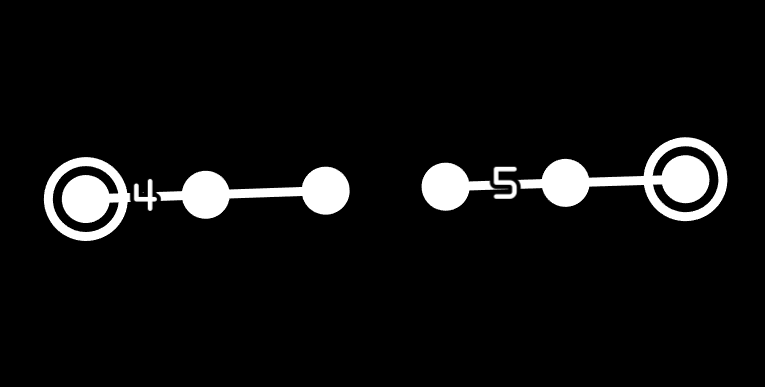
Lastly, if a Coxeter Dynkin diagram has only one ringed node, it's known as quasiregular. What's cool about quasiregular polytopes is that their vertex figure is simply the polytope generated by removing the ringed node, and then ringing all the nodes it was connected to. Finding the vertex figures of other polytopes is beyond my understanding, so I just try to visualize it or find patterns, but that gets hard after 4D. For example, truncation gives you an edge figure pyramid verf.
Chapter 4 - The Vector Approach
So far we've been doing things with mirrors and starting points because that's how the wythoff construction works and this is how Coxeter Dynkin diagrams actually behave. But, this is confusing. Something simpler I've devised that works especially well for convex stuff is what I call the vector approach.
I wanna make it clear that this is a tool to help you understand and isn't how these things really work, and the definition is a bit cyclic, since you have to know the omnitruncate of a diagram first. Anyway, let's use B3 as an example because it has the simplest angles for me to model in blender.
Every node in a Coxeter Dynkin diagram corresponds to a group of vectors that you push vertices out by. Which vector you pick depends on which facets the vertex is in, which is why you need to think of scaling the omnitruncate by 0 and then pushing vertices out. So there's the cube vertex/octahedron face vectors (x4o3o), the cube/octahedron edge vectors (o4x3o), and the octahedron vertex/cube face vectors (o4o3x), and then every ringing is a combination of these. This sounds confusing, but I think trying to explain it through text makes it sound more confusing than it really is.
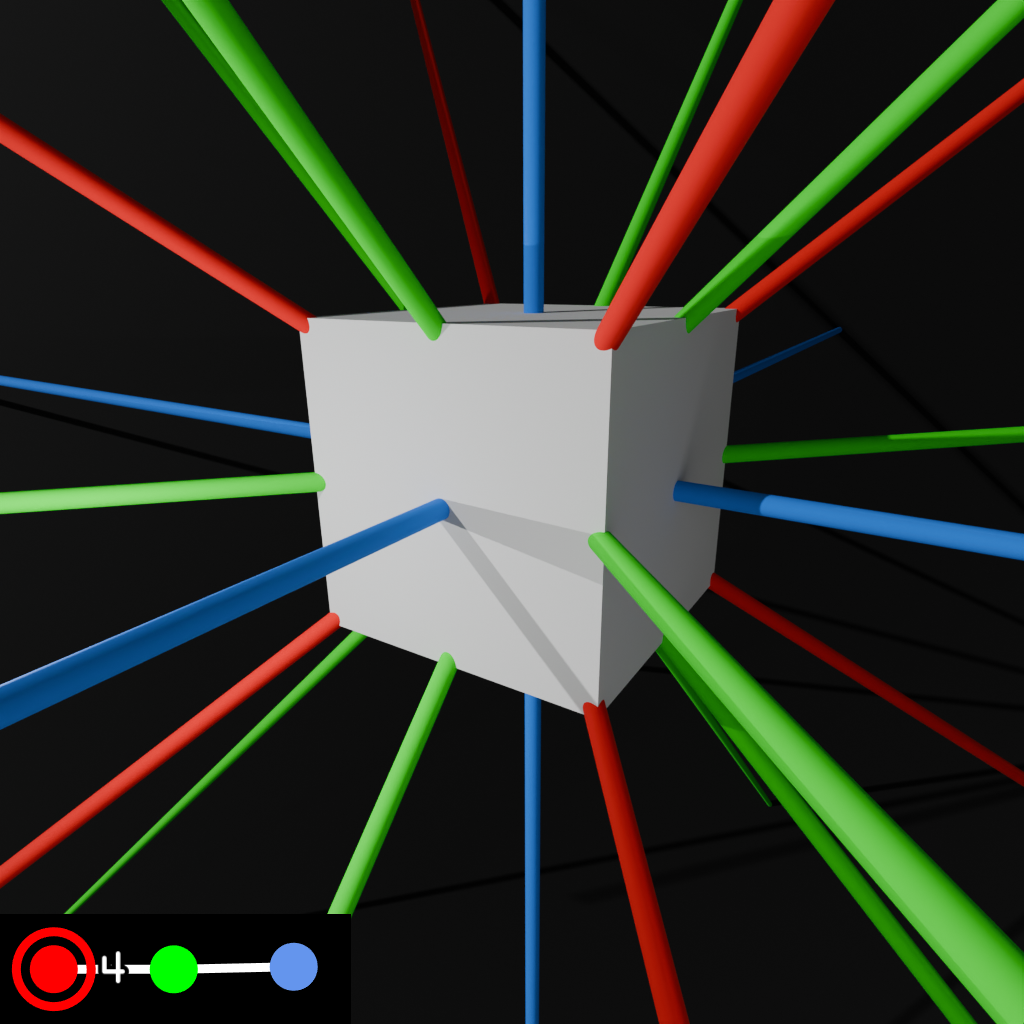
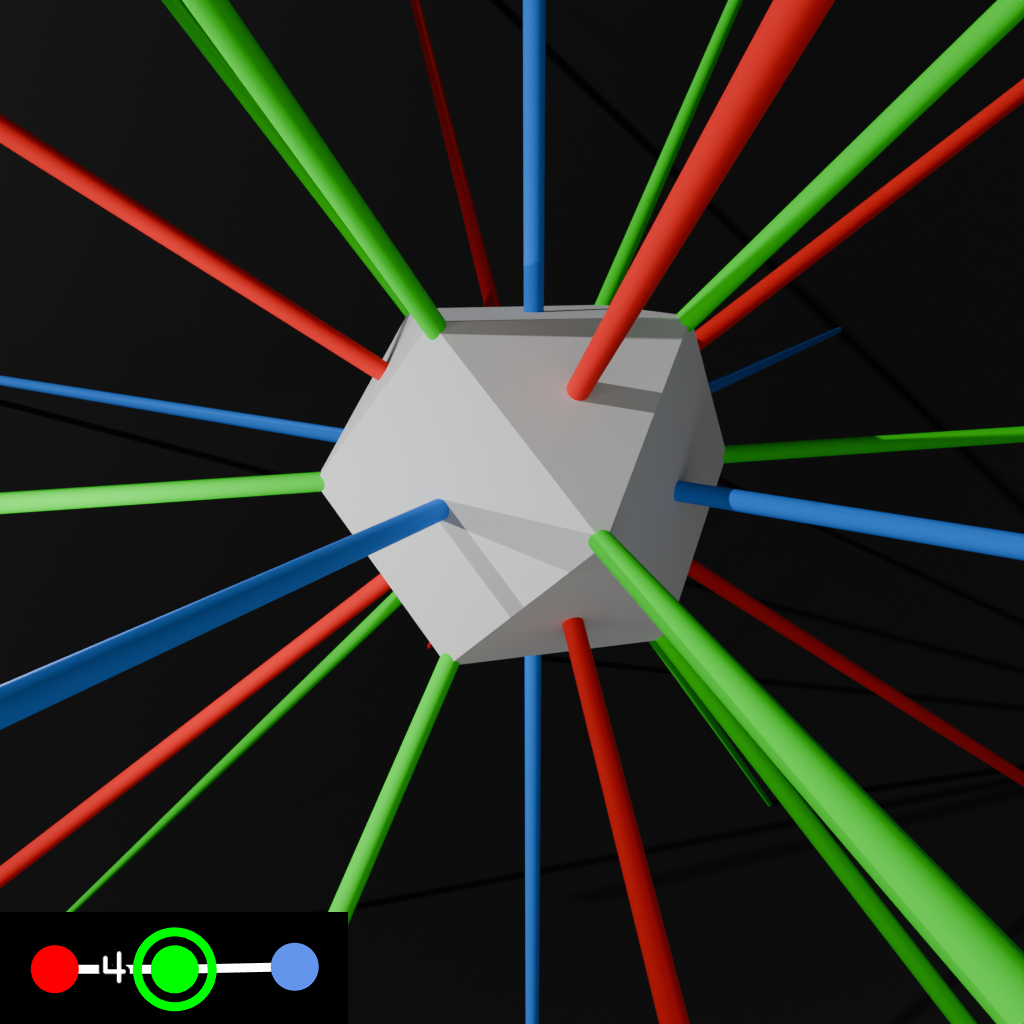
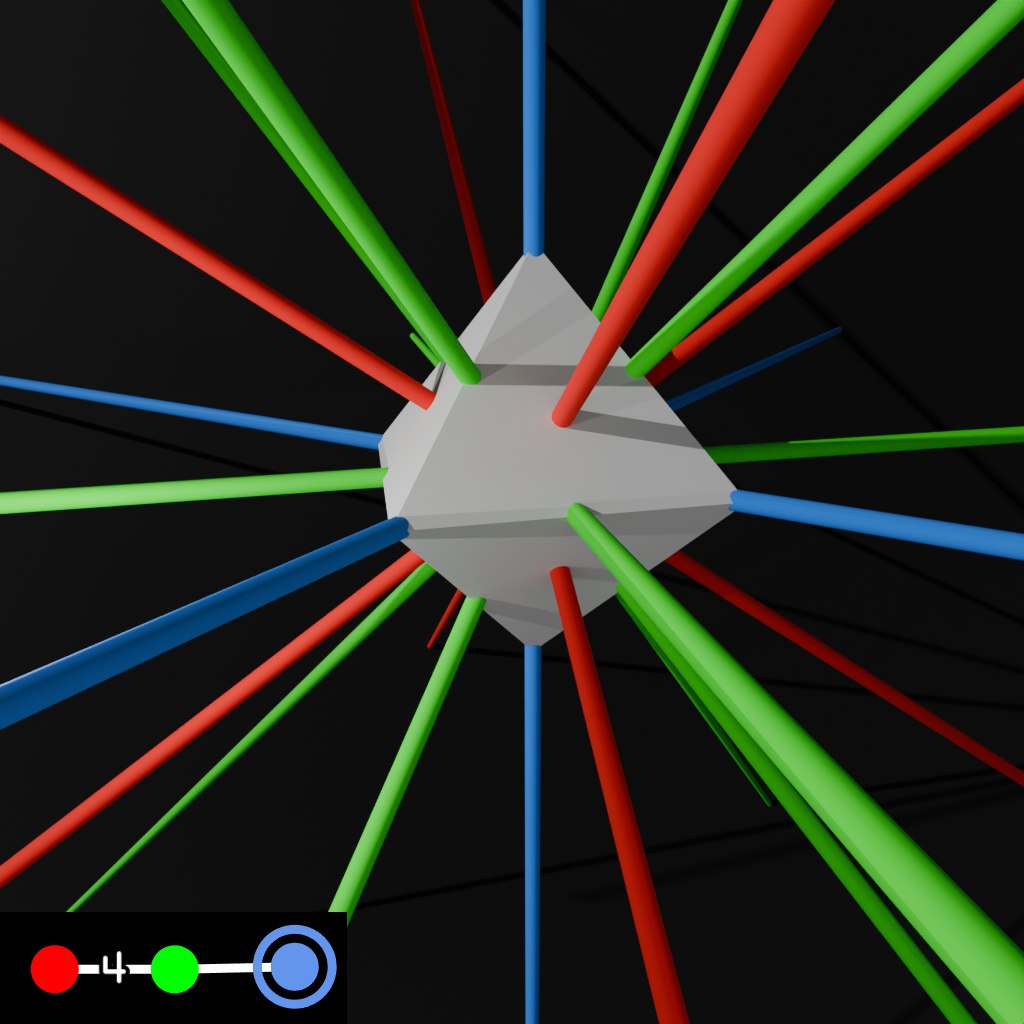
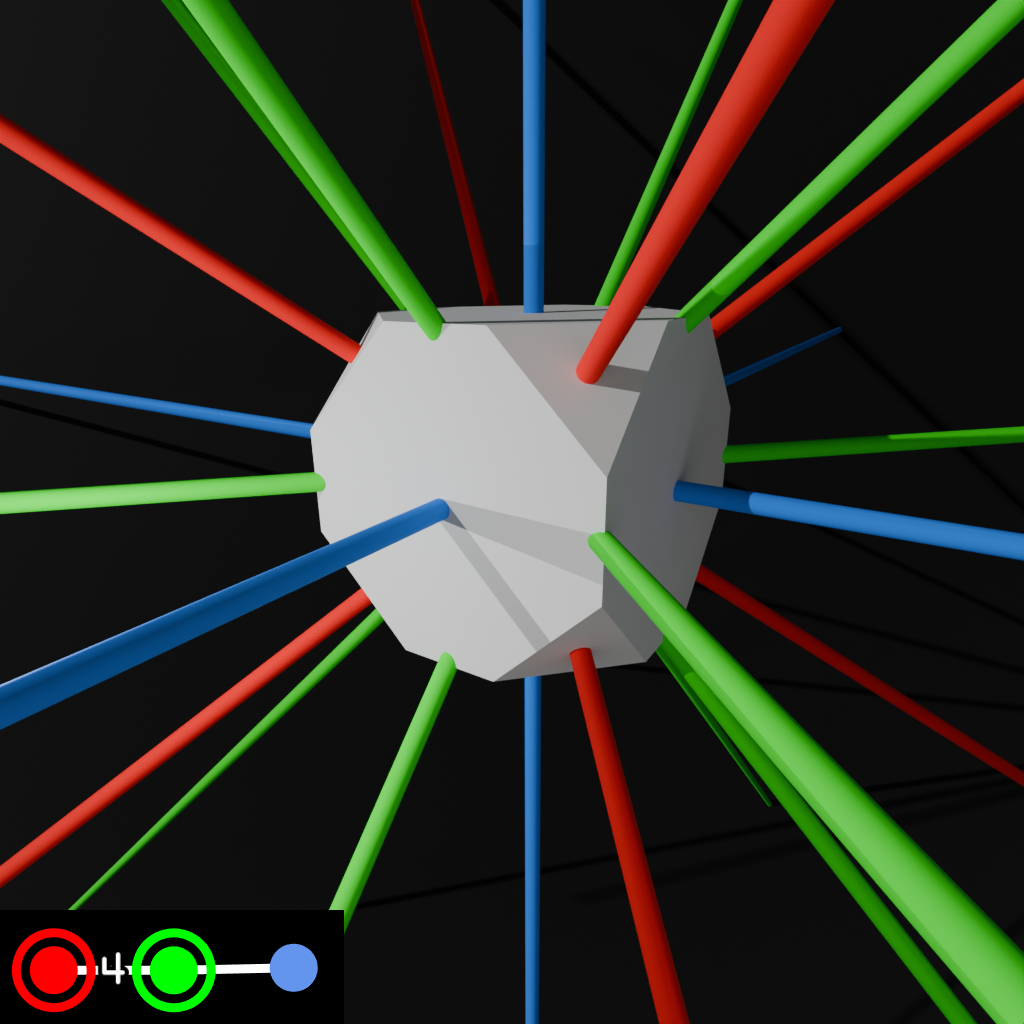
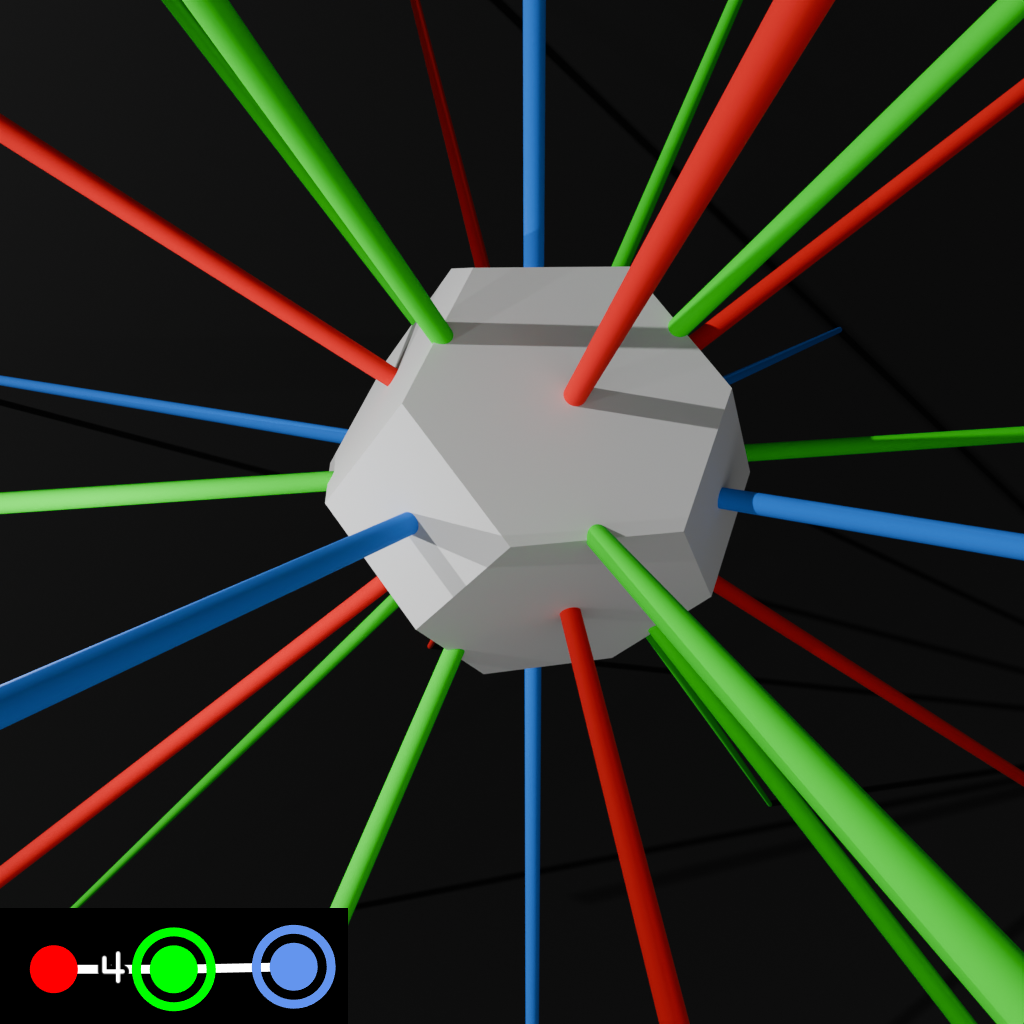
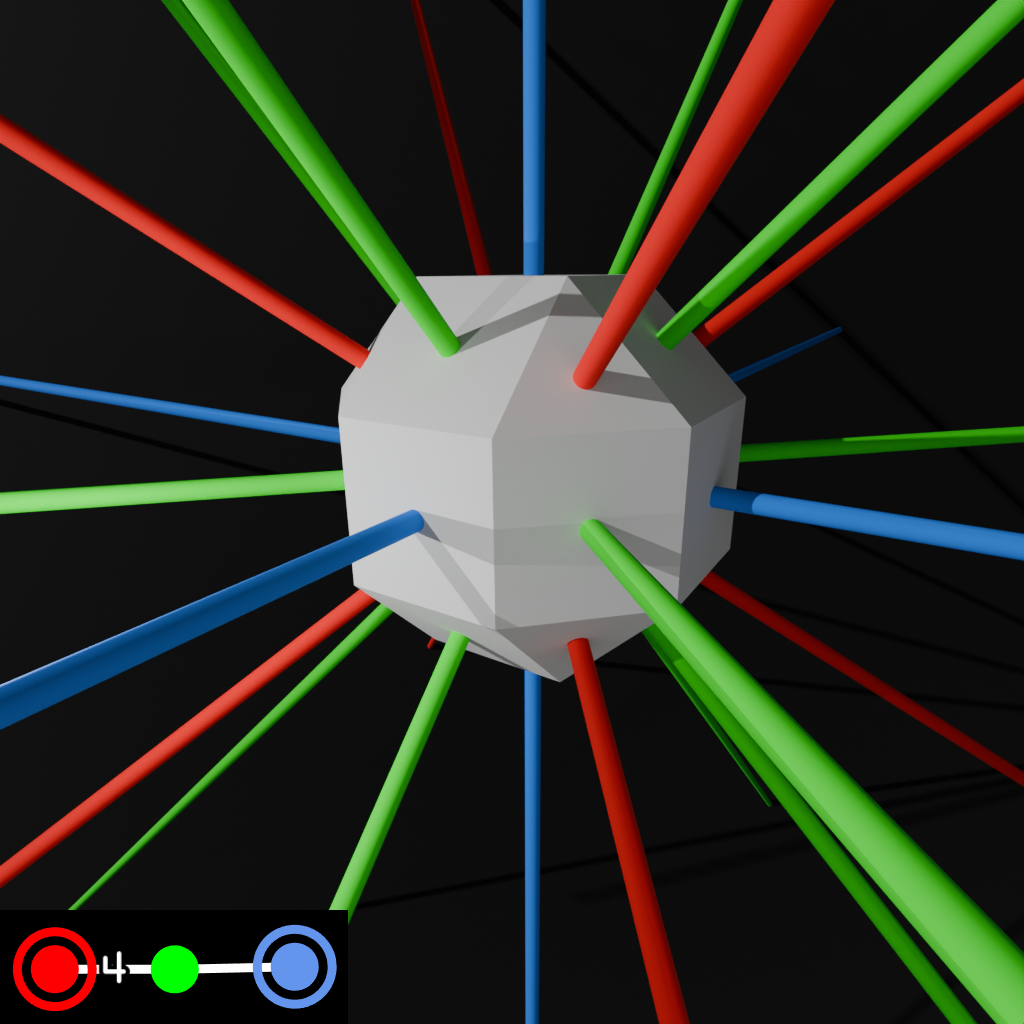
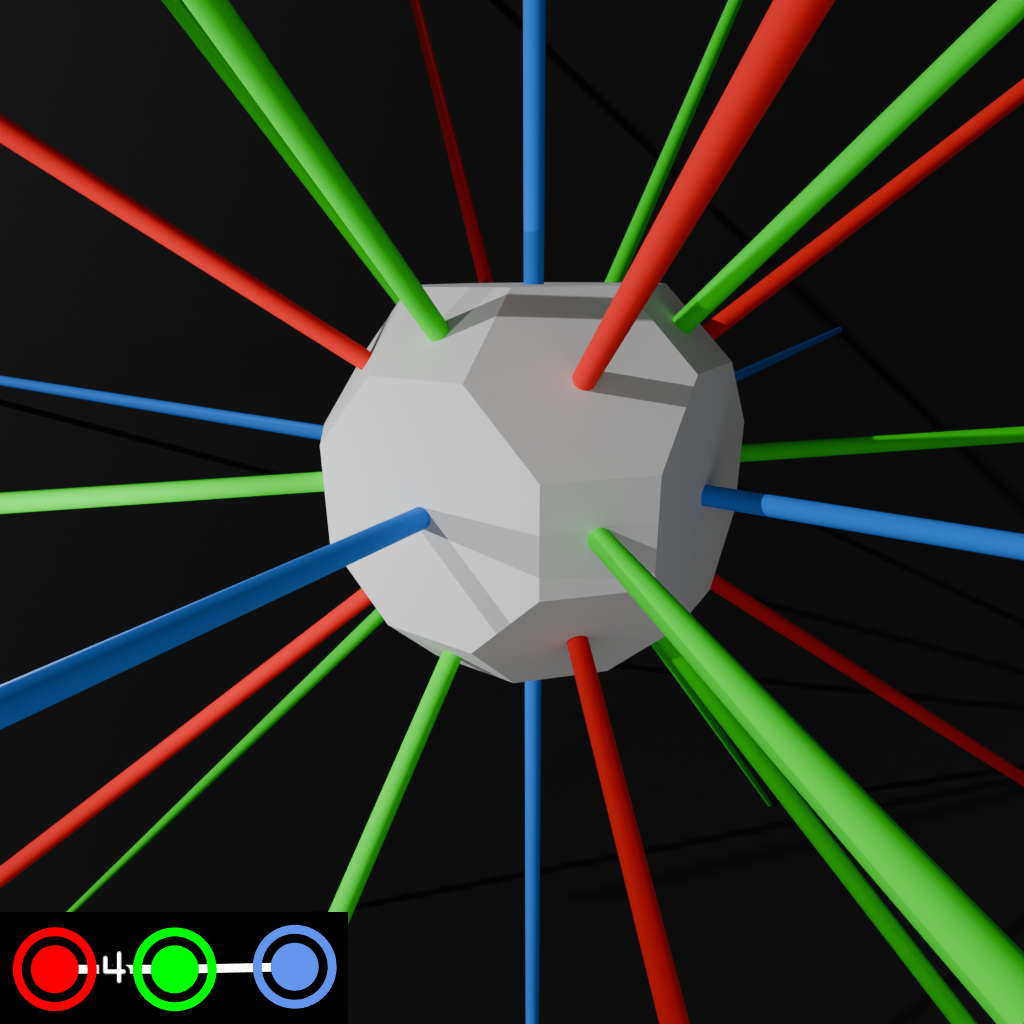
If you don't think this makes it more intuitive, or simpler, that's fine. Personally I like it a lot, because I can understand how each node would change the shape if toggled. Like in x4o3o, if I ring the third node, the 6 squares will be pushed outward, and then rectangular symmetric squares and triangular symmetric triangles would fill the gaps.
Before going up to 4D in the next chapter, try to guess some 3D shapes to make sure you really understand how these work. Remember that x x is a rectangle, which, given that uniforms have only one edge length, really means a square with an alternating pattern of facets connected to it.
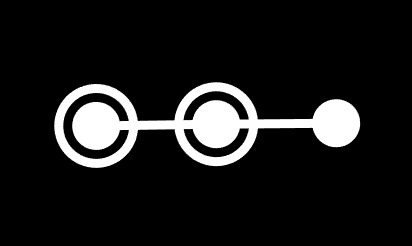

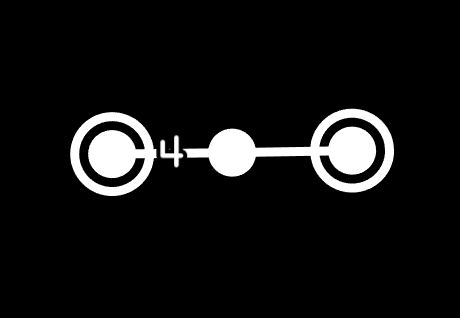
Chapter 5 - The Shortest Way Here Is Through
Alright, time for my favorite dimension, 4D! This chapter, like the previous, is technically unnecessary, but I think some examples could be helpful, and I have some things to say about facet naming.

Pictured above is the 1 3 ringed 600-cell. The polytope wiki says it has 600 cuboctahedra, but I don't think we should call these cuboctahedra because they only have A3 symmetry within the polychoron. We should call these 1 3 ringed tetrahedra, or 5 op tetrahedra. The standard name would be "cantellated tetrahedra".
If you think this doesn't matter, well, B4 has A3 and B3 axes so it's more confusing. This is the higher dimensional analog of hexagons in the Archimedean solids really being 1 2 ringed triangles.
Another reason it matters is that it makes the F4 Archimedeans stand out less! The fact that F4 only has B3 non prismatic axes is really special and unique. If we named facets based on symmetry, like in my two naming schemes, the F4s would stand out a lot more for never having fake cubic symmetric facets.
Here are some Coxeter Dynkin diagrams to practice on:
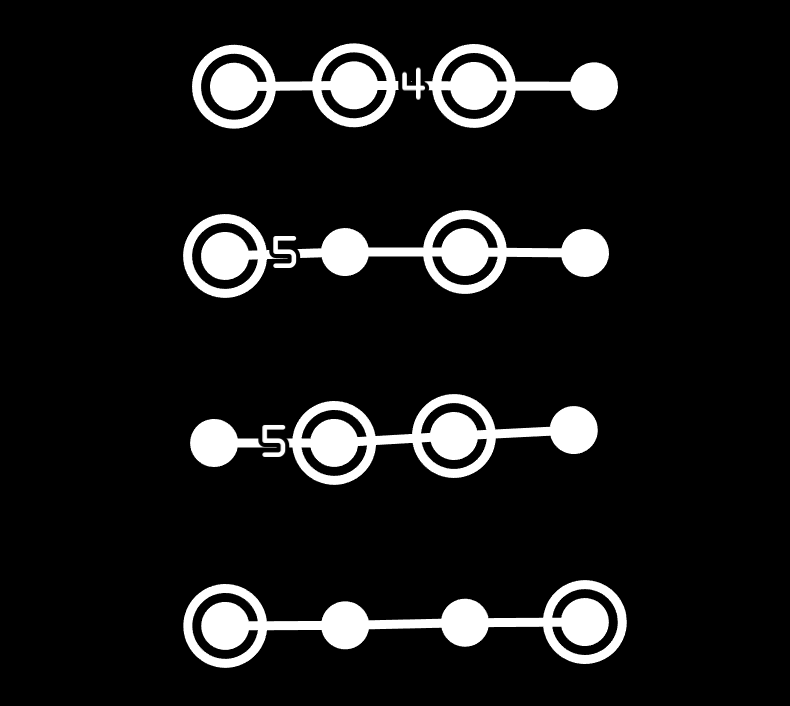
Here are the answers/links: first, second, third, and fourth.
In 4D, there's A4 and B4 as those always exist, and then there's also H4, but it's the last Hn symmetry group. Finally, there's F4. F4 can be generalized, usually as A2-B3-F4, but it's only unique and finite in 4D. Very cool! I have an entire video about the 4D platonic solids, but mostly the 24-cell. There's also D4 and K4, but D4 doesn't have any corresponding platonic solid, and Kn is prismatic. What is Dn?
Chapter 6 - Demicubes
What is Dn? It's half of Bn symmetry, in a very specific way. The other two ways are chiral Bn, notated Bn+, and pyrito symmetry, Bn/2. These are both non wythoffian, meaning they don't have a Coxeter diagram. But Dn is wythoffian, which is kinda weird!
In order to explain Dn, I'll need to explain coloring. Basically, when you color an element you make it distinct, despite otherwise being identical to other elements of different colors. For example, by coloring the octahedron's faces in two different ways, you can give it A3 symmetry. This is a 2 ringed tetrahedron, o3x3o.
If you color the vertices of a cube with two colors such that no two vertices of the same color are connected by an edge, you get this pretty alternation pattern. Now take the convex hull of vertices of one color. That gives you a shape known as the n-demicube, it has 2n n-1 demicubic facets, and 2n-1 n-1 simplex facets.
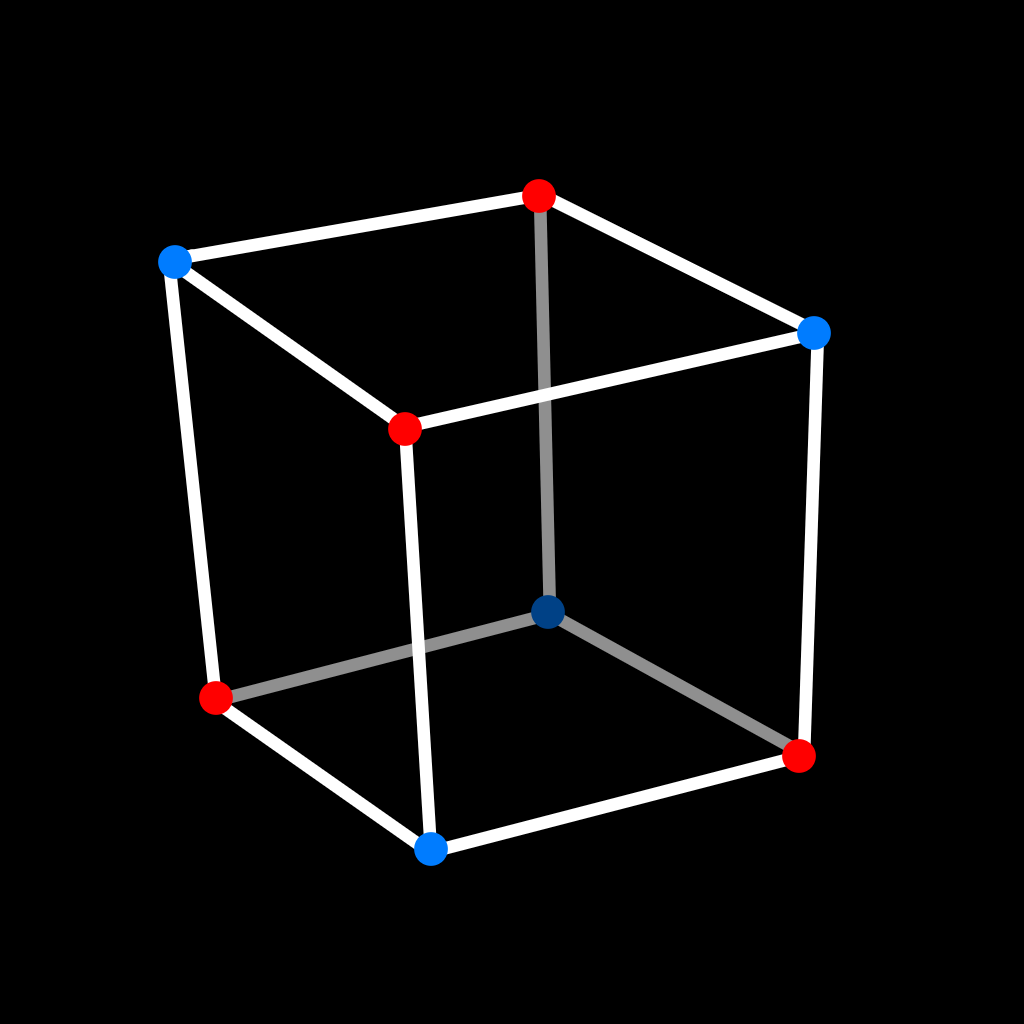
Dn is the symmetry of the n-cube with 2-colored vertices in this way.
The 2-demicube is a digon, which is degenerate. This means the 3-demicube doesn't have 6 + 4 faces, but instead has 6 edges and 4 triangles. Which is the tetrahedron. The 4-demicube has 8 3-demicubes and 8 3-simplices, which means it has 16 tetrahedra. It's the 16-cell, which has B4 symmetry rather than D4. How queer! The 4-demicube is the only demicube to have more symmetry than demicubic. That's why I defined Dn the way I did, rather than saying it's the symmetry group of the n-demicube.
For n=5 and above, the demicube becomes a normal and distinct thing. If you take the Dn diagram shown above, and truncate it until it has 3 nodes, you'll notice it becomes o3o3o. This makes it clear that D3 = A3, which I think is really cool and makes it feel non coincidental and instead inevitable. There's a similar explanation for the 16-cell, but for it to make sense we're gonna need to talk about super symmetry.
Chapter 7 - Super Symmetry
Coxeter diagrams describe symmetry groups, but sometimes they themselves have symmetry. Look at any I2(n) or An Coxeter diagram, it has reflectional symmetry o. This means that, if you have a Coxeter Dynkin diagram with ringed nodes that maintain that reflectional symmetry, the resulting polytope will have double symmetry not shown by the diagram because reflectional symmetry is order 2. This can be optionally ignored, as done by my naming schemes, for the sake of facet connections being clearer. (Like the thing about cuboctahedra from earlier)
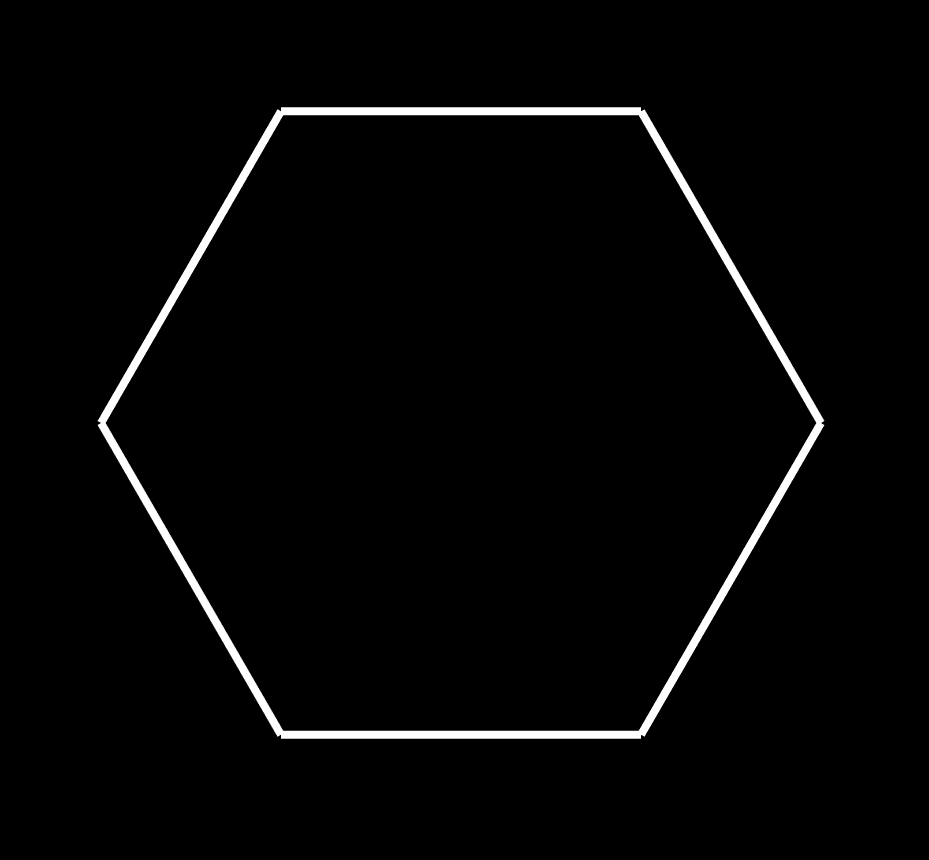
For example, x3x is a hexagon with lower symmetry. If you forget about the Coxeter Dynkin diagram and just look at the shape it produces, it has I2(6), or A2⨯2 symmetry. The symmetry group doubled!
Another example is o3x3o. Despite being based off of A3, it has B3 symmetry, because A3 = D3 and D3⨯2 is obviously B3! Very cool!
Finally, in 4D, you can have something like x3x3x3x. This has A4⨯2 symmetry, which is actually non wythoffian. It's weird that A2 and A3 double to a wythoffian symmetry group, usually An⨯2 isn't like that.
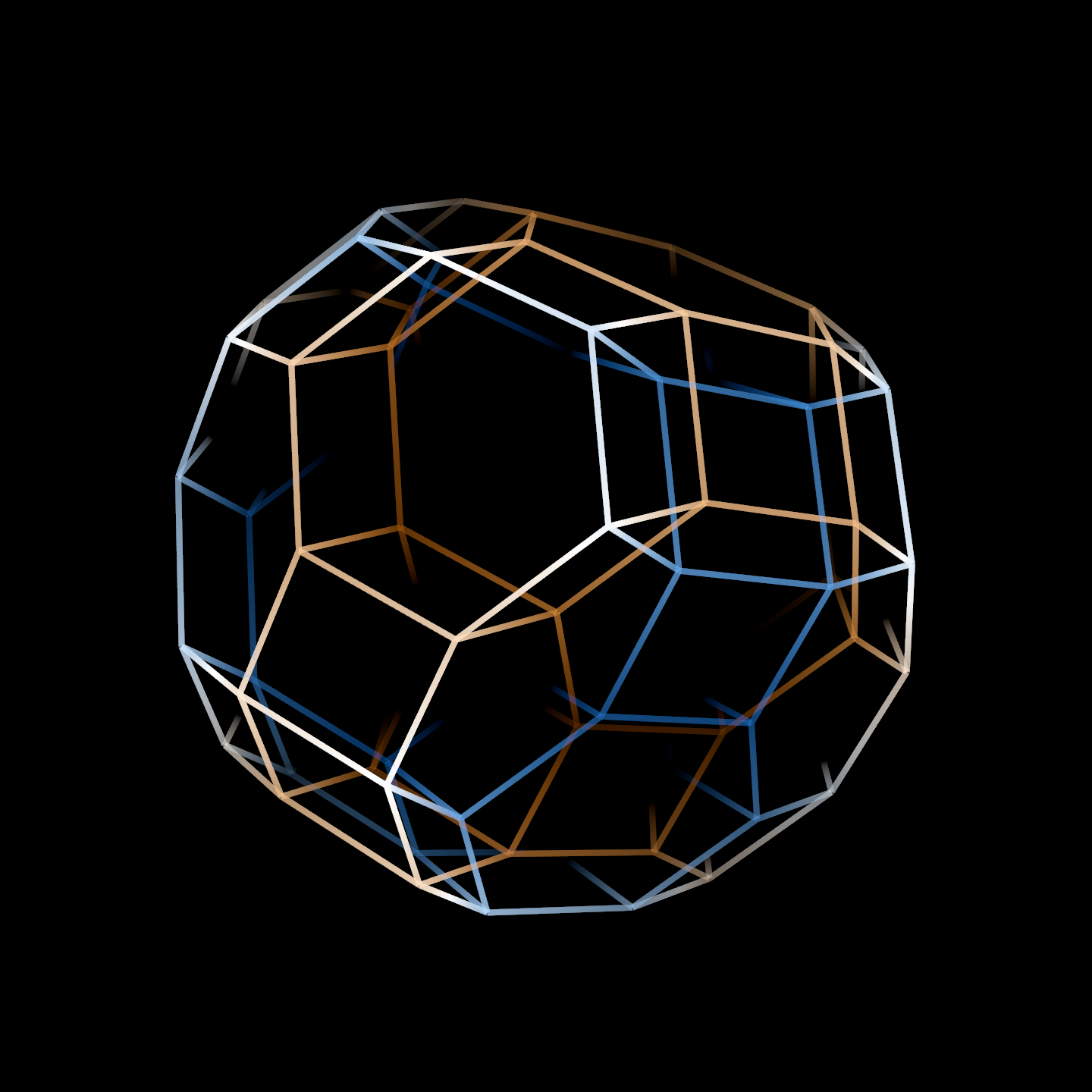
One last thing to note here is that if you look at the image above, you'll notice what appear to be truncated octahedra. But I don't think they should be called that, because even though x3x3x alone doubles to B3 symmetry, when it's inside a larger polytope, it only has A3 symmetry still. Hence why I'd call it a 7 op tetrahedron, or omni ringed tetrahedron. Notice how half of the hexagons connect to other "truncated octahedra", and the other half connect to hexagonal prisms. They're not truncated octahedra, they're omnitruncated tetrahedra.
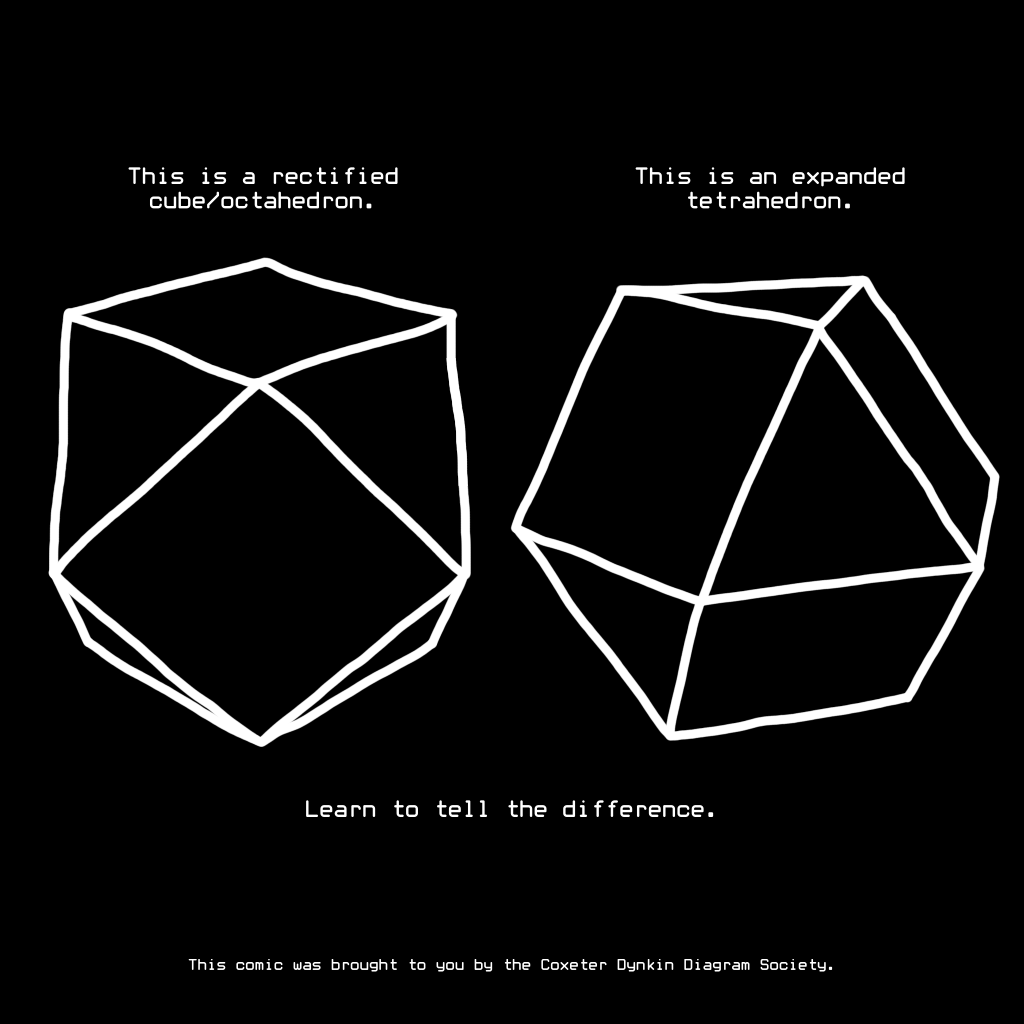
Relevant 53rd dimension comic:
Why does super symmetry happen? Well if you look at the diagram x3x3x3x again, and try to find its facets, you'll find x3x3x, x3x x, x x3x, and x3x3x. There are two groups of two of the same facets, so these can map onto each other if you divorce the polytope from the Coxeter Dynkin diagram.
Chapter 8 - D4, B4, And F4
Now that I've explained super symmetry, it's time to go towards something more interesting than order 2 reflectional symmetry. Remember what Dn looks like? Well if you truncate it down to 4 nodes, you get this diagram. It has A2 (order 6) symmetry.
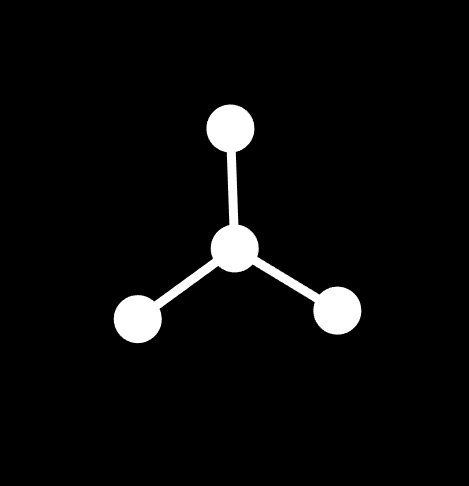
If you ring any of the outer nodes, you get the 4-demicube. Also, while it doesn't respect the full A2 symmetry of the diagram, the other two unringed nodes can still swap, so we're left with double D4, or B4 symmetry! How cool is that?! I just LOVE that Coxeter Dynkin diagrams give you more intuition for why these things happen, besides "well the 3-demicube is a 3-simplex, sooo".

Another way to think about this is that if you ring the end of the longest branch of a Dn diagram, you get an orthoplex under Dn symmetry, aka it has two colors of facets. And if you ring one of the two 1 long branches, you get the n-demicube. Well, D4 has 3 1 long branches, so these two things are equivalent!
Wait but didn't I just say that it has B4 symmetry? I'm only talking about its symmetry doubling because if you look at the shape generated by the Coxeter Dynkin diagram, it'll have B4 symmetry, not D4. This happens with any n-orthoplex you generate by ringing the end of the longest branch of Dn, but not with any n-demicube, since in this particular case it is also the 4-demicube.
As the target audience of this webpage knows, if you rectify a 16-cell, you get a 24-cell. The common way to explain this is that the tetrahedra rectify to octahedra, and the verfs are added as facets, so you get 16+8 octahedra. But this is unsatisfying, and doesn't explain why they're all equivalent under symmetry, just that they're the same shape. Well, if you ring the middle node of the D4 diagram, the full A2 symmetry is respected, and we get D4⨯6, also known as F4!

You can confirm this is a 24-cell. Every facet is a rectified tetrahedron (octahedron), and the vertex figure is x x x, or a cube. Anyway yeah, I think this is really freaking cool and awesome! I'm a bit sad I didn't have the time to explain this in Platonic Solids Part 2, but oh well, I get to explain it now!
Lastly, I want to say that, because D4⨯2 is B4, and D4⨯6 is F4, F4 is necessarily B4⨯3, too. Because this doesn't have shit to do with Coxeter Dynkin diagrams, B4 is not a normal subgroup in F4, and so this is just a fun intuitive thing that doesn't have any mathematical bearing on anything. Just thought I'd mention it though! Also, the tesseract has 8 B3 facets, and the 24-cell has 3 times as many B3 facets. The 16-cell has 16 A3 facets, which counts for 8 B3 facets since A3 is half of B3.
Chapter 9 - How Do Branched Diagrams Work?
What does that node with 3 connections really mean though? It's technically no different, but I won't blame you for finding it confusing. That node having 3 connections means that it's at a non 90 degree angle from 3 other mirrors, rather than the normal 1 or 2. This doesn't change anything about finding facets, and the edges still just mean "the angle between the normal vectors of these two mirrors", it's just a bit trickier to think about, since D4 is the simplest case. Let's analyze it!
The outer 3 3-planes (which I'll just call volumes from here on out) are pretty easy, that's just K3. Now the fourth volume's normal is 60 degrees away from the first 3 volumes' normals. Sticking to 3D for simplicity, imagine 3 squares arranged like K3, and then a fourth volume with its normal pointing along (1, 1, 1).normalized(). Trouble is, this is only 54.74° from the other normals.
Using the spherical equivalent of the Pythagorean theorem, we can calculate that we must raise the normal of the fourth volume into the fourth dimension by 24.5799°. The hypotenuse is 60° and one of the legs is 54.74°, and then we can find the second leg which is how we get 24.5799°.
Here are the 4 volumes of D4, the K3 nodes are white and the node with 3 connections is red. In this view, you can see how it looks like K3.
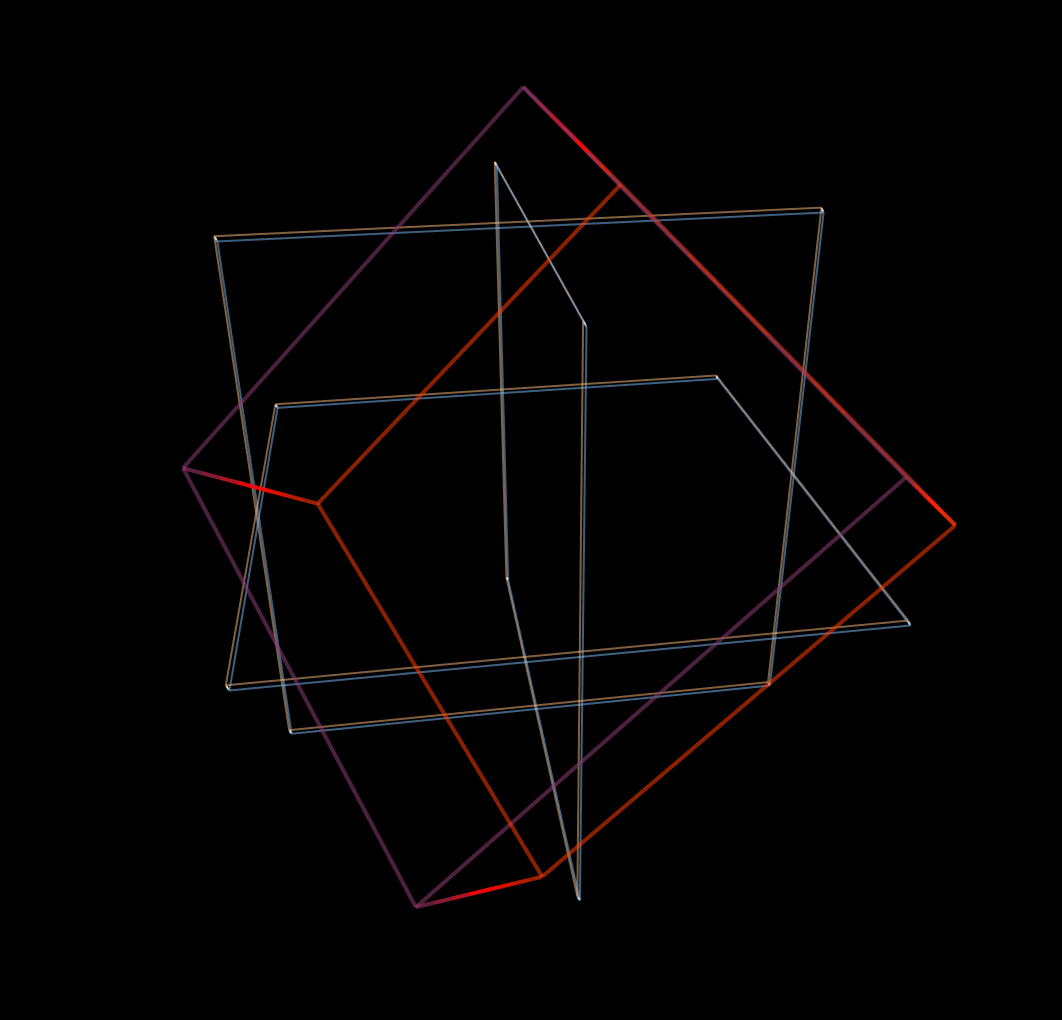
In this view, you can see how the red volume and the white volumes are τ/6 radians apart.
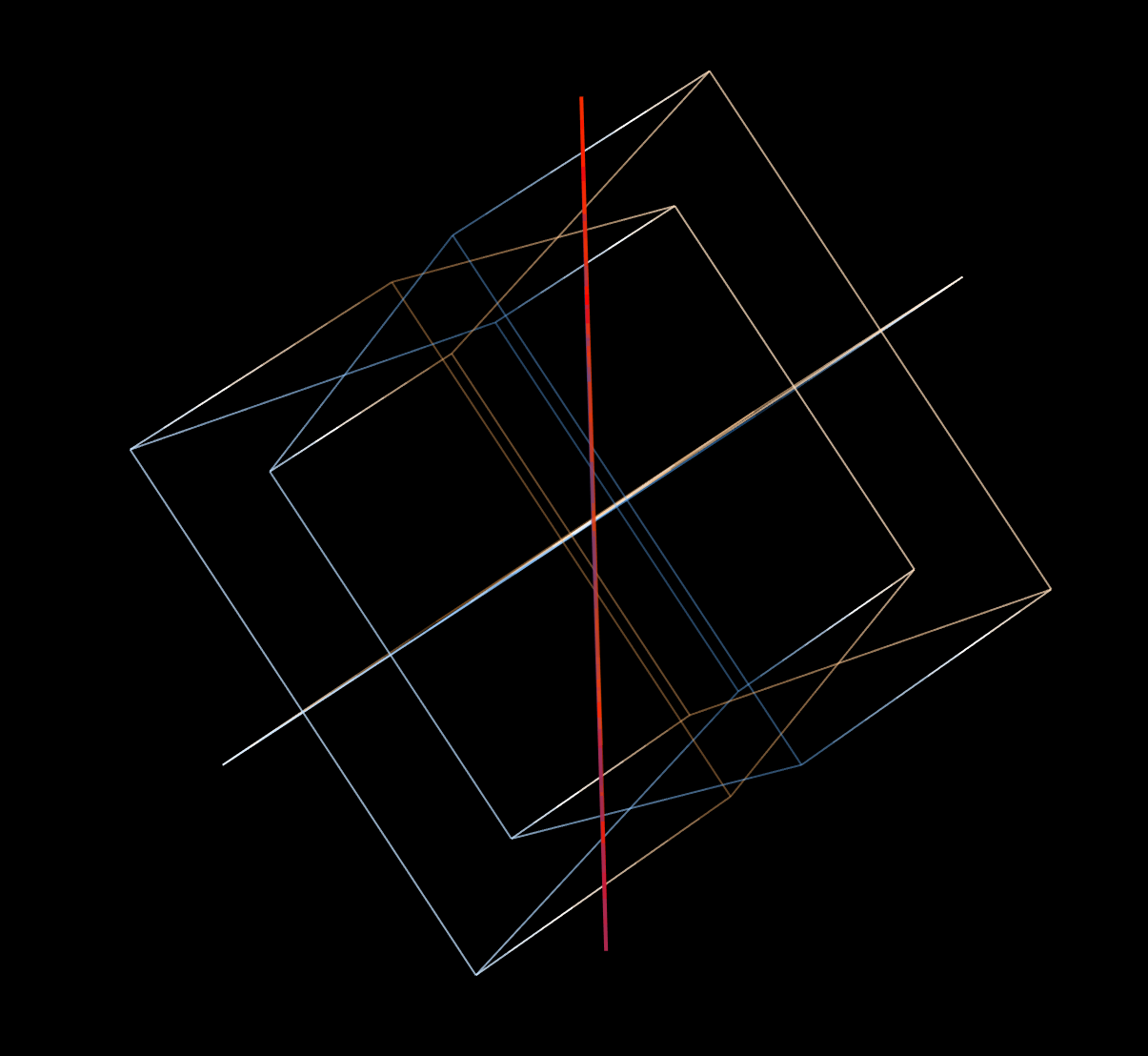
Finally, in this view our view direction is parallel to the fourth volume's normal.
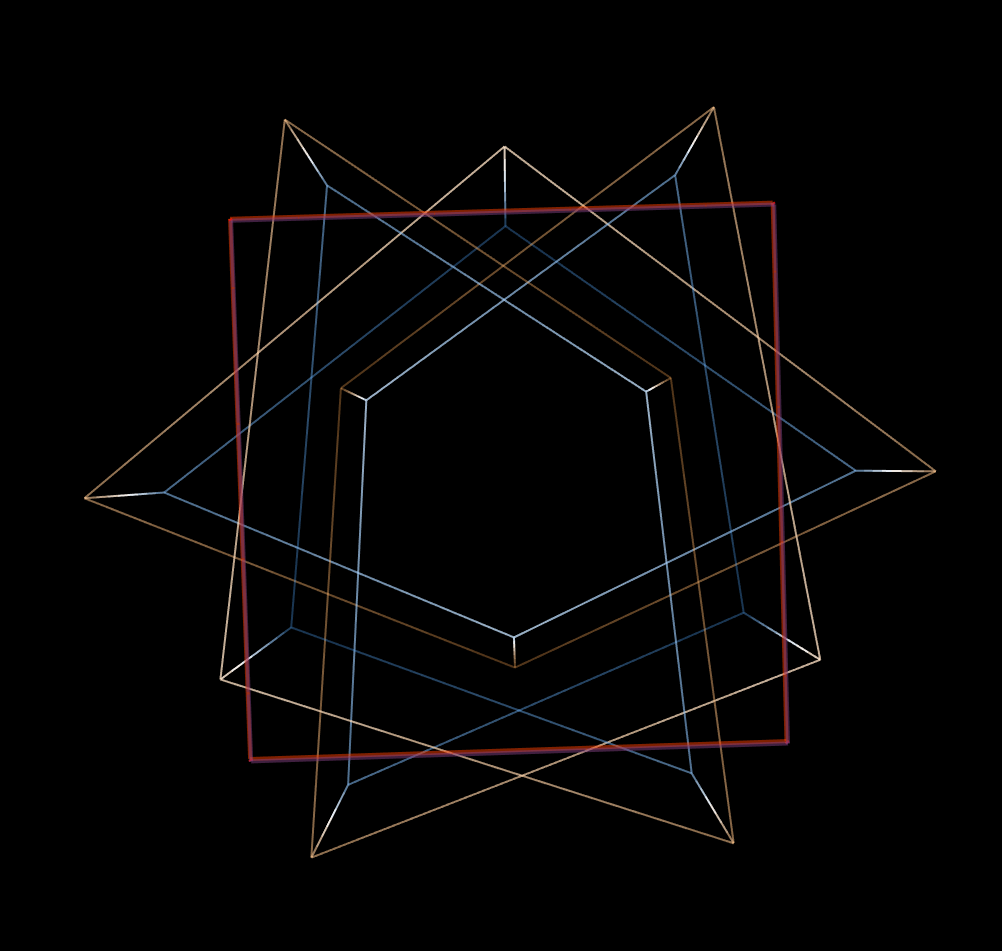
The fourth volume's normal is actually perfectly (0.5, 0.5, 0.5, 0.5), which is super cool!
Hopefully, that made branched Coxeter Dynkin diagrams make a little bit more sense. Before writing this section, I wasn't really sure how they worked on an intuitive level either, but having to build the Coxeter system in 4D and figure out the math myself helps a lot! Lastly, let's cover how to notate them.
If you wish to connect to an earlier node, you can use an asterisk followed by the letter of the alphabet its index corresponds to. For example, to describe D4, you would write o3o3o *b3o. The *b means "reference the second node described, rather than creating a new one", and then it carries on with the diagram, making a 3 edge and then an unringed node. This is how you can do loops too, like x3o3o3o3*a as shown below.
If you're struggling to construct this one, don't worry, it'll be covered in Chapter 11.
Chapter 10 - Gossetics
This is a chart showing every single finite convex Coxeter system.

There are the 4 familiar families, I2(n), An, Bn, and Dn, and the familiar sporadics, H3, H4, and F4. But what are E6, E7, and E8?

Here's another, different chart of the same thing. It shows how certain symmetry groups have multiple generalizations, like A3 becoming A4 and D4, and B3 becoming B4 and F4. It also shows that D5 generalizes to the finite En family, and the infinite Dn family. Let's start with E6.
This is the hexelte, it's one of the simplest E6 uniforms. It has 3 branches, length 2, 2, and 1. It only has one ring, and it's at one of the ends, meaning we can use a_bc notation to name it. You put the length of the ringed branch first, and then after the underscore, the length of all the unringed branches. That's why the polytope wiki calls the hexelte the 2_21 polytope. Let's figure out its facets and vertex figure.
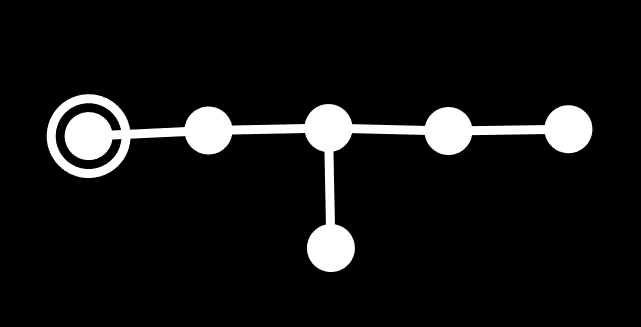
As you cover nodes, you'll notice that the only two that can be covered are the extremities, the branch and the 5th node. If you cover the 5th node, you get the 4 ringed 5-demicube, with its diagram shown below. This is just a 5-orthoplex, but as I've said before, my naming schemes name it differently for its lower symmetry. This tells us that the 5-orthoplex has two types of facets connecting to it, in a pattern that gives it D5 symmetry.
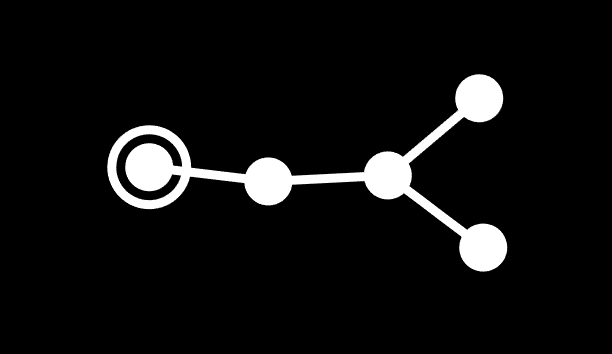
This facet can be called the 2_11 polytope using the a_bc notation.
If you cover the branch node, you get the 5-simplex. Simple enough. Not much to say here.
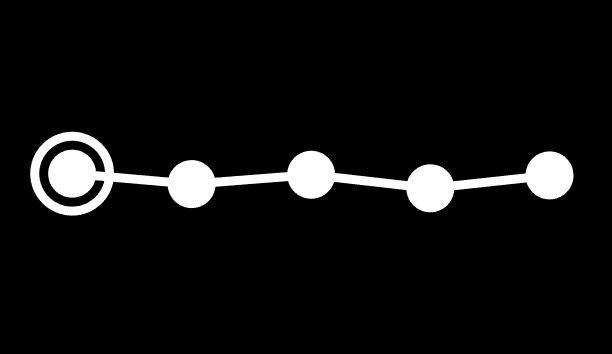
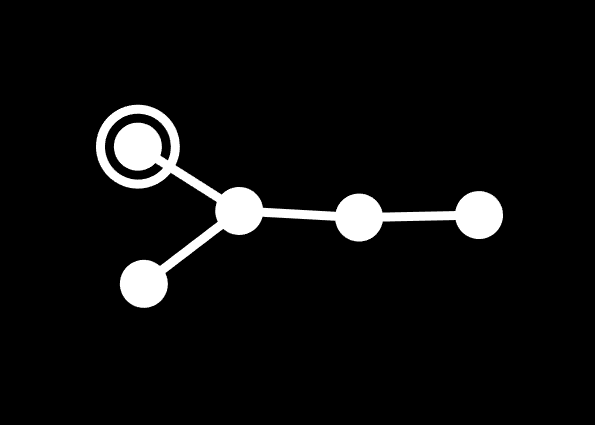
Lastly, its vertex figure is the 5-demicube. The n-demicube is just Dn with one of the 1 long branches ringed, in case you forgot. This can also be called the 1_21 polytope.
With all this, we can get a pretty good sense of the structure of this shape, without even knowing what it looks like! Here's what it looks like.
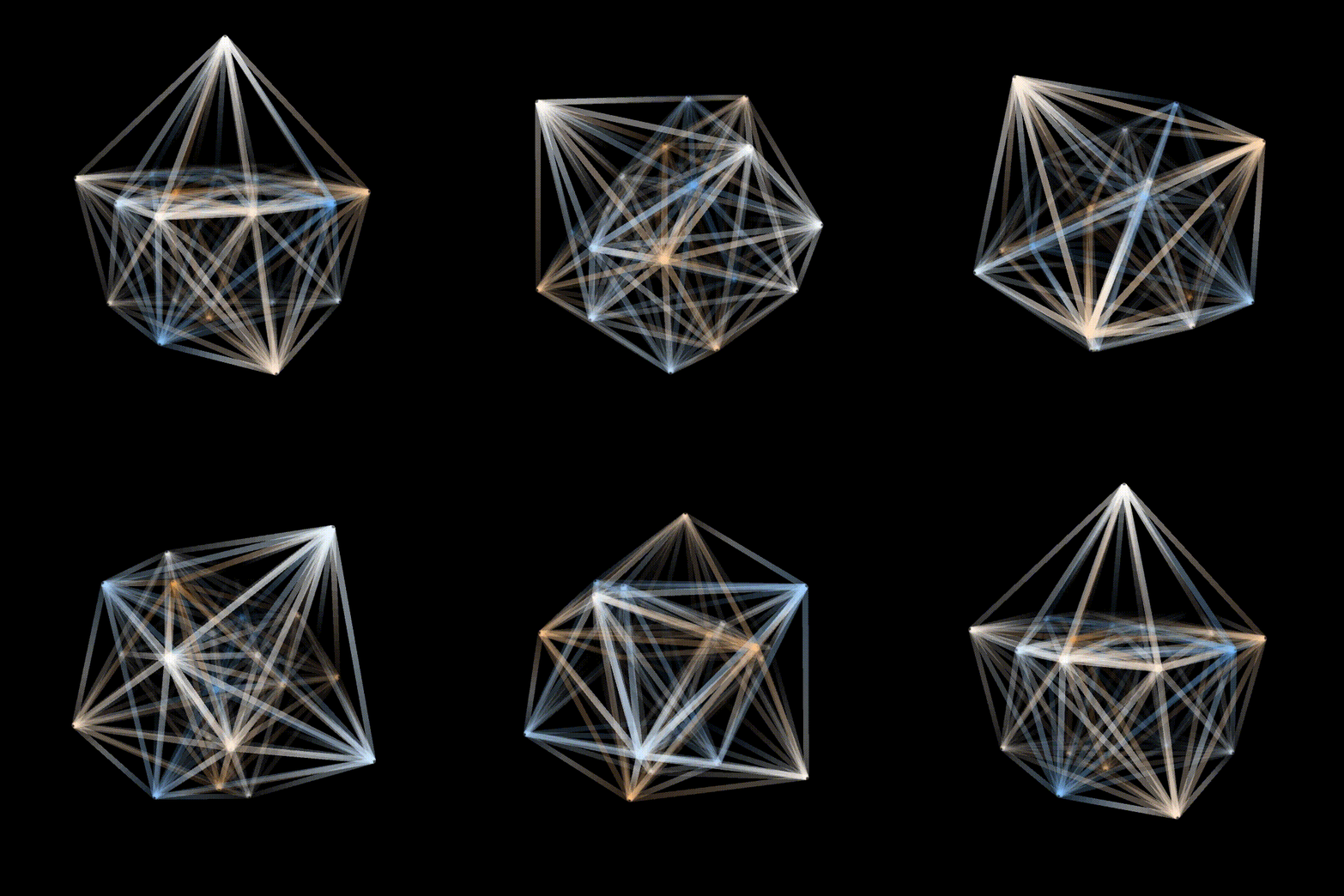
I also have a video just for the hexelte.
So, it seems that E6 has D5 axes (the 4 ringed 5-demicube facets of the hexelte), A5 axes (the 5-simplex facets of the hexelte), and D5 axes (the vertices of the hexelte). It has two sets of D5 axes, and the diagram is mirror symmetric. That's no coincidence! As you might've guessed, E6 can double into E6⨯2, a truly beautiful symmetry group. E6 actually lacks central inversion symmetry, meaning that if you multiply the scale of every axis by -1, it won't look the same. You can see this in the hexelte gif whenever it appears to be a triangle. E6⨯2 has central inversion symmetry.
The simplest shape with E6⨯2 symmetry is called the hexelte gamma. Its Coxeter Dynkin diagram is 1_22 (o3o3o3o3o *c3x). The hexelte has 27 vertices and 27 4 ringed 5-demicubes, so as you might expect, the hexelte gamma has 54 5-demicubes as facets. It's isotopic, so it can be used as a fair die in 6D.
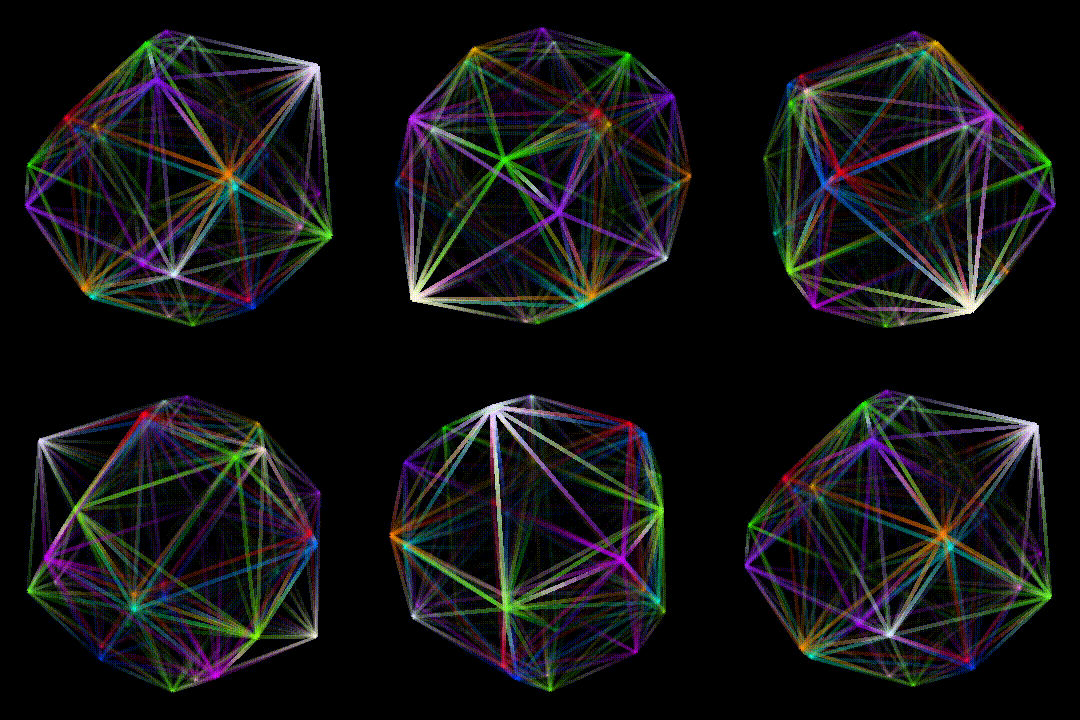
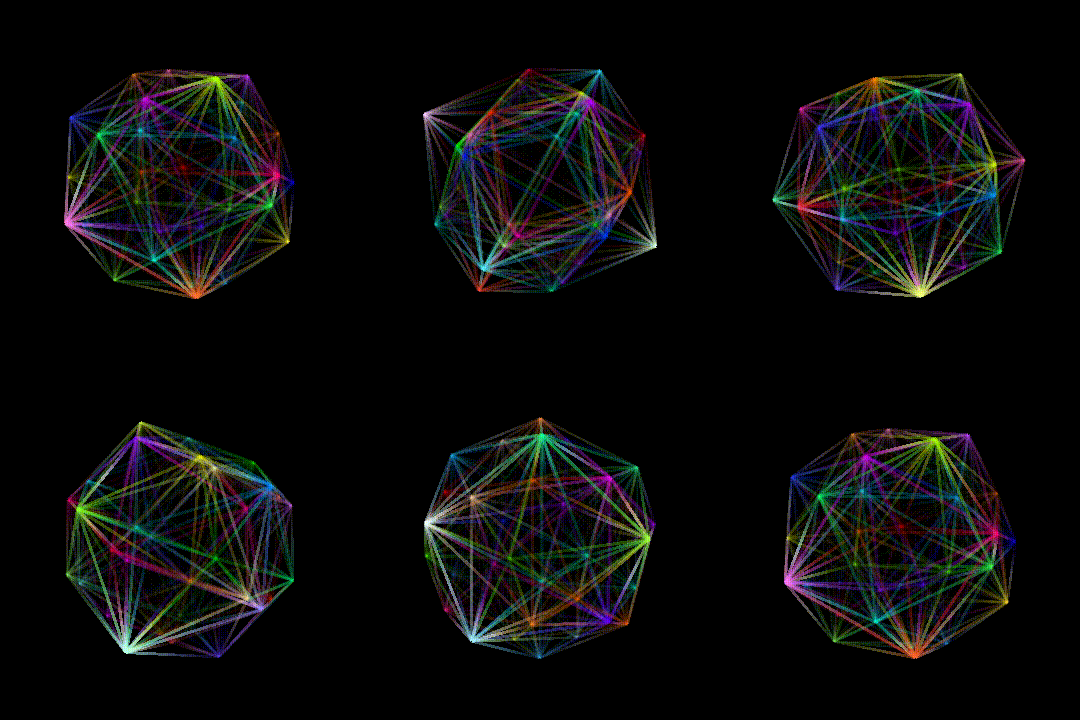
The hexelte, along with being the only non polygonal non simplicial uniform with an odd number of vertices, ALSO tiles 6D SPACE! Which is just crazy! The hexelte gamma doesn't tile 6D space, but if you rectify it, that does.
Okay, so now we have a pretty good understanding of how E6 works. What about E7?
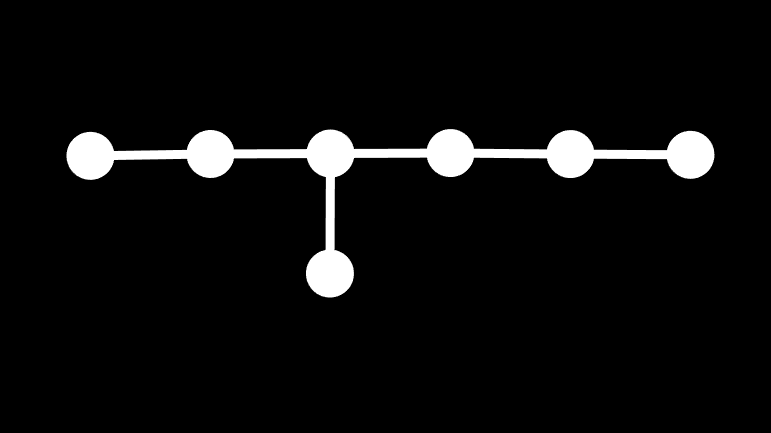
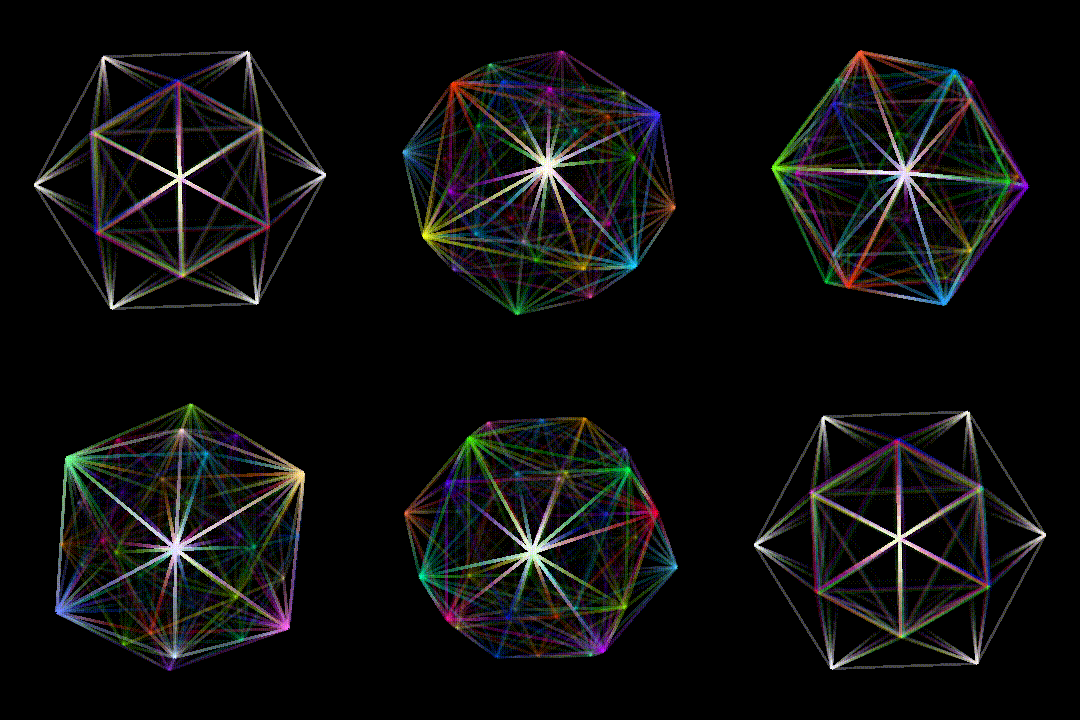
E7 doesn't have mirror symmetry, so it can't be doubled. Unlike E6, it has central inversion symmetry. Let's ring the end of the longest branch. This is called the septelte alpha, or 3_21.
You could probably figure out the verf and facets of the septelte alpha on your own, but I'll just tell you that it has D6 6-orthoplices and A6 6-simplices, with a hexelte vertex figure. This means the septelte alpha is the analog of the hexelte, and the 5-demicube is the analog of the hexelte because of the vertex figure of the hexelte. The k_21 polytopes are all the vertex figure of the next, and the 5-demicube can be called the 1_21.
What about the other extremities? Ringing the length 2 branch gives you the septelte beta (2_31), which is a shape I made a shitposty render compilation about. Lastly, 1_32 is called the septelte gamma.
I call the long branch alpha, the short branch beta, and the really short branch gamma. The hexelte alpha and hexelte beta are the same, so they're both just called the hexelte. The alphas have 3 flag orbits, and the betas have rank - 3 flag orbits. The hexelte gamma is a beautiful shape with only 3 flag orbits, and is isotopic, but that's just because of E6⨯2. The other two gammas are ugly, with 10 and 15 flag orbits respectively.
To summarize: Alphas have A and D symmetric facets, and E symmetric vertices. Betas have E and A symmetric facets, and D symmetric vertices. And gammas have E and D symmetric facets, and A symmetric vertices. Except the hexelte gamma, it has A5⨯2 symmetric vertices.
Lastly, E8 continues making the alpha branch longer. Its non prismatic axes are E7, D7, and A7. This matches nicely with E7's E6, D6, and A6. In fact, E5 = D5, so E6's D5, D5, and A5 fits the pattern too. E4 is A4, and E3 is A2xA1.
E8 has the octelte alpha (4_21), octelte beta (2_41), and octelte gamma (1_42), just like E7.
I want to draw attention to how similar En is to Hn. Hn starts at H2, with a symmetry group that lacks central inversion symmetry, just like E6. In fact, the hexelte kinda looks like a pentagon sometimes, in various ways. Also, the alphas and betas are kinda like duals, and the hexelte alpha is the hexelte beta, so it's kind of like a self dual, just like the pentagon! That's why we call it the hexelte and not the hexelte alpha.
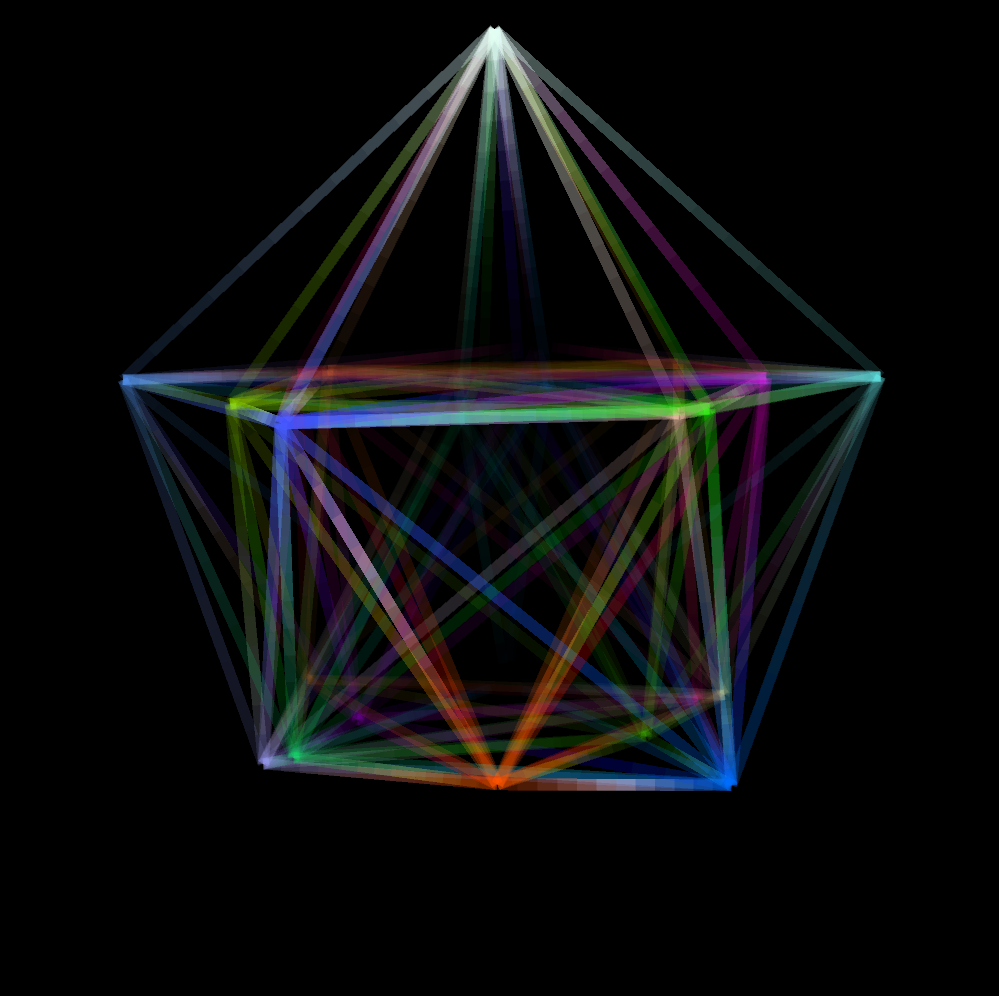
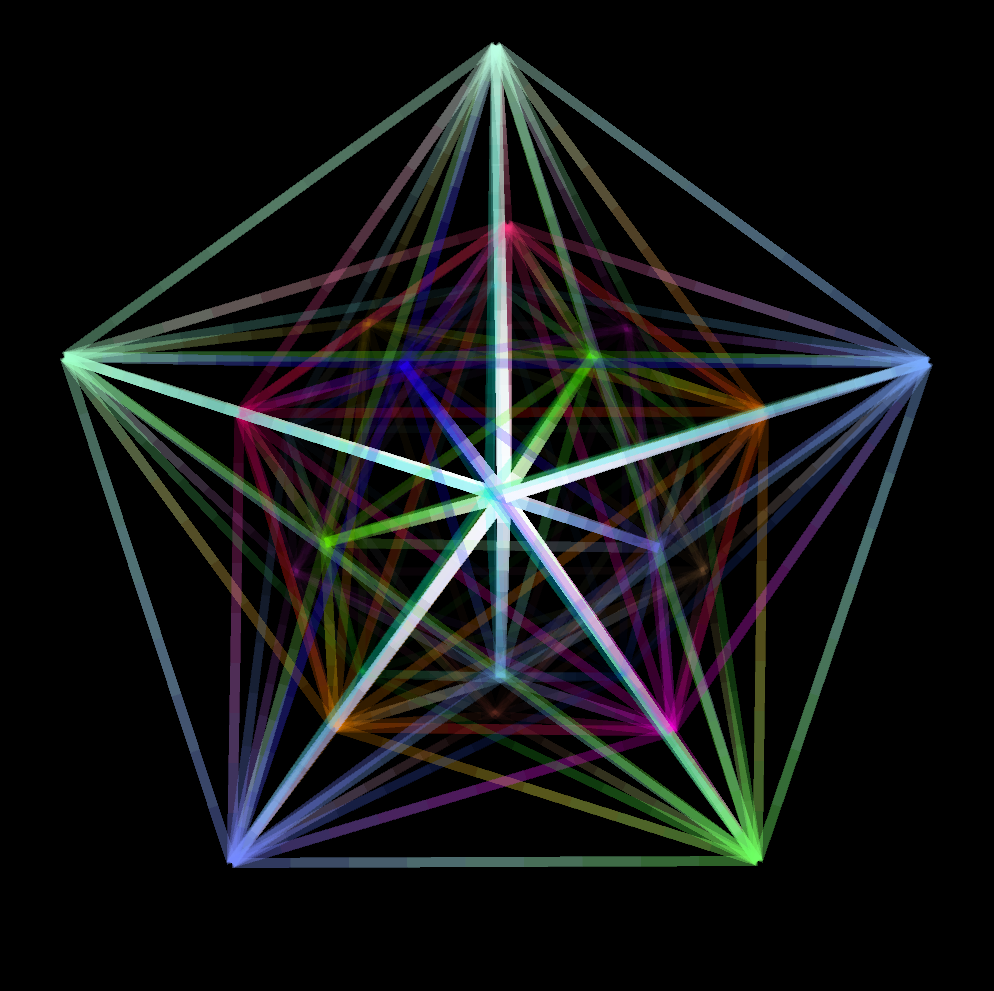
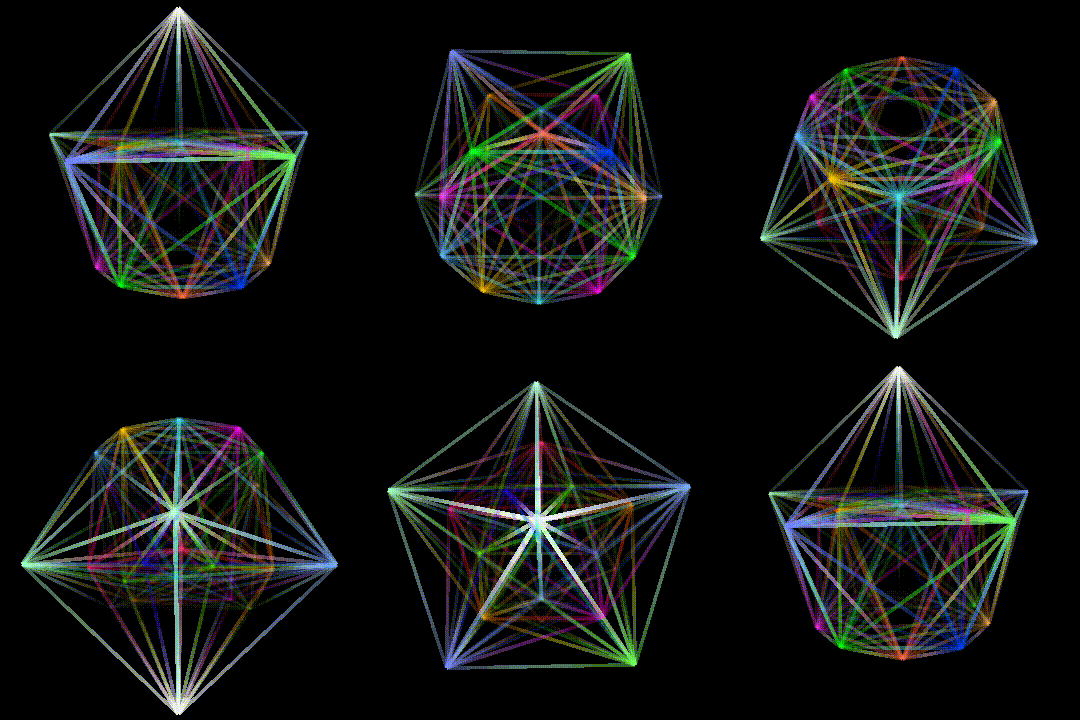
Then, H3 doesn't lack central inversion, and the icosahedron has H2's simplest polytope as its vertex figure, and it's a pentagonal antiprism with pentagonal pyramids on either side. Well guess what! E7's simplest polytope, the septelte alpha, is a hexelte alterprism with hexelte pyramids on either side!
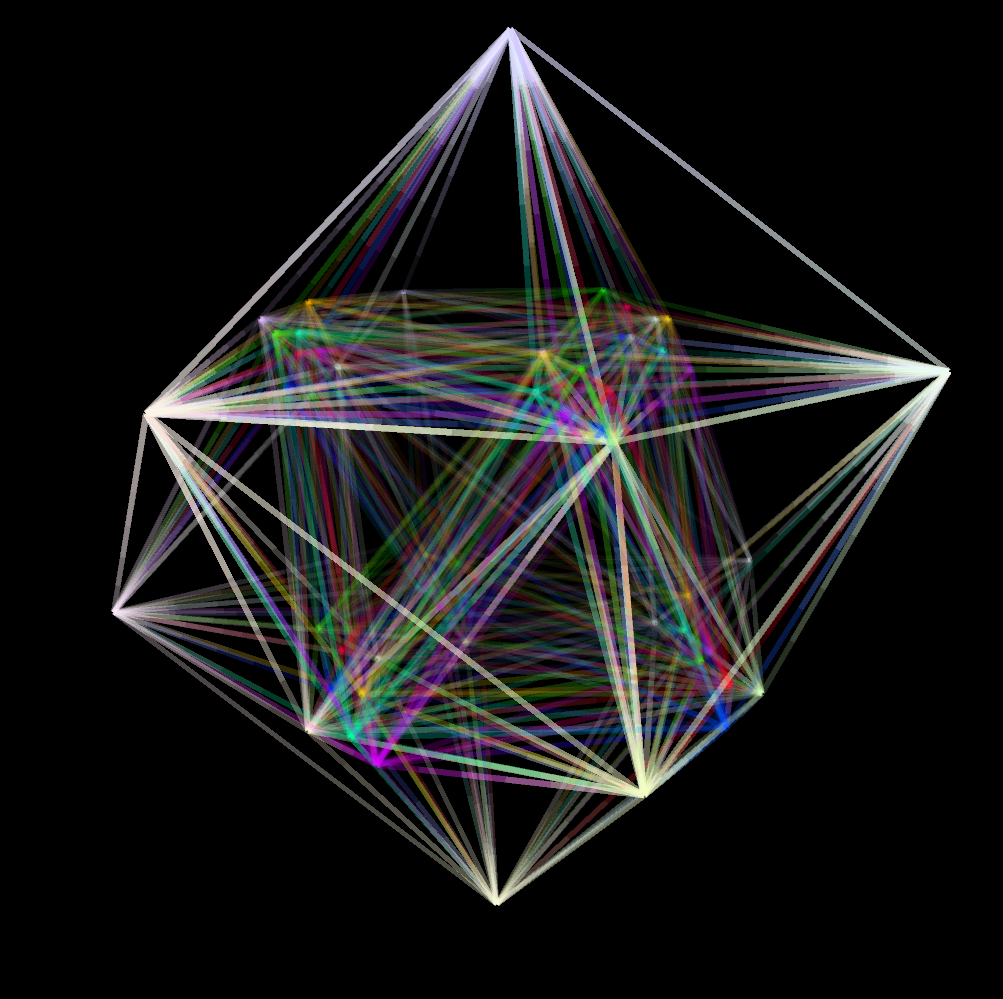
Finally, H4 has axes with central inversion symmetry, meaning that if those axes are used as vertices, the polytope has rings of vertices. And the 600-cell does indeed have rings of vertices, 12 rings of 10. The octelte alpha has 40* rings of 6 vertices for the same reason!
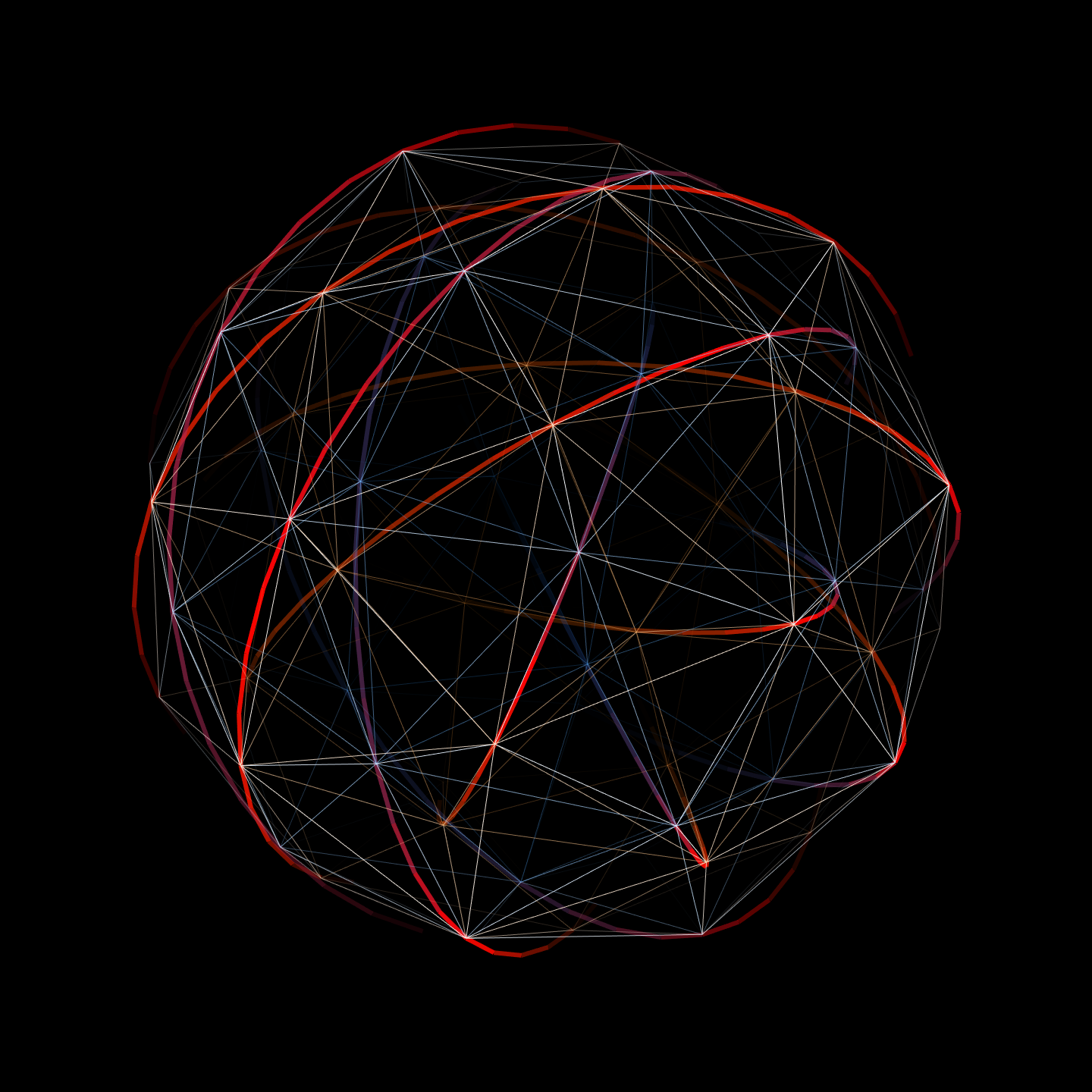
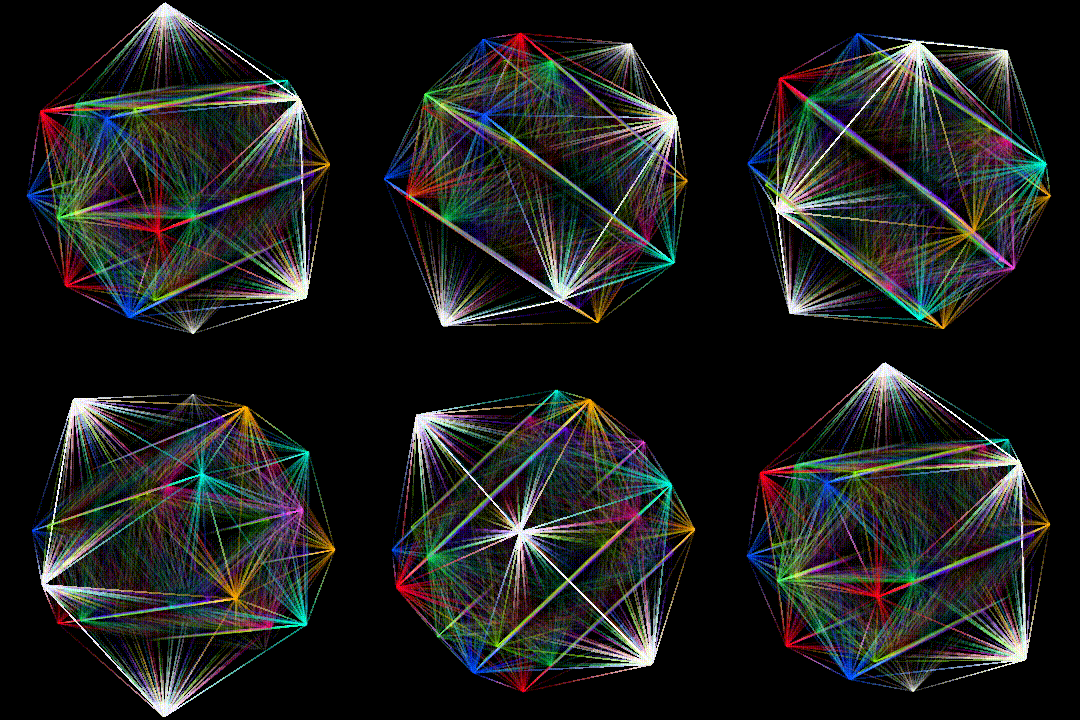
I really love this group of symmetry groups, it's kinda pretty, and it's very funky! They're the only sporadic groups to have 3 types of non prismatic axes, unless you count Dn's two copies of An, which I don't. It's so weird that there's a symmetry group that has no corresponding platonic solids. Dn is the same, but it's an infinite family and derived from the cube, so it's a little easier to accept.
The alphas, hexelte gamma, and maybe even the betas feel kinda like platonic solids, in the sense that they have a unique symmetry group, very few flag orbits, and generate Archimedeans. This whole webpage is about Coxeter Dynkin diagrams, so I kinda have to talk about uniforms, but I think the duals of the alphas are just as beautiful, maybe even more beautiful. Generally I prefer maximally symmetric facets over maximally symmetric vertices, and the alpha duals are exactly that. Not the dual hexelte gamma though, D5 has a greater order than A5⨯2, so the hexelte gamma has more symmetric facets than vertices.
Below are a dual hexelte, and dual hexelte gamma. The facets of the dual hexelte gamma have been blown apart which is why it looks like that. This is a thing I do in some renders to make things easier to understand.
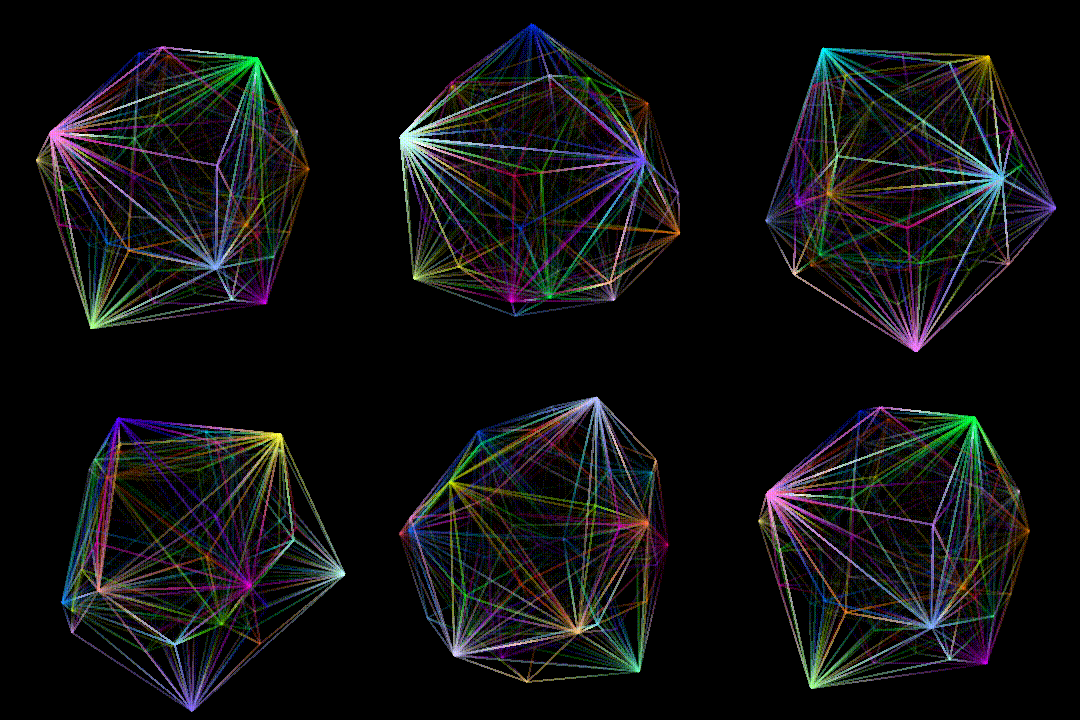
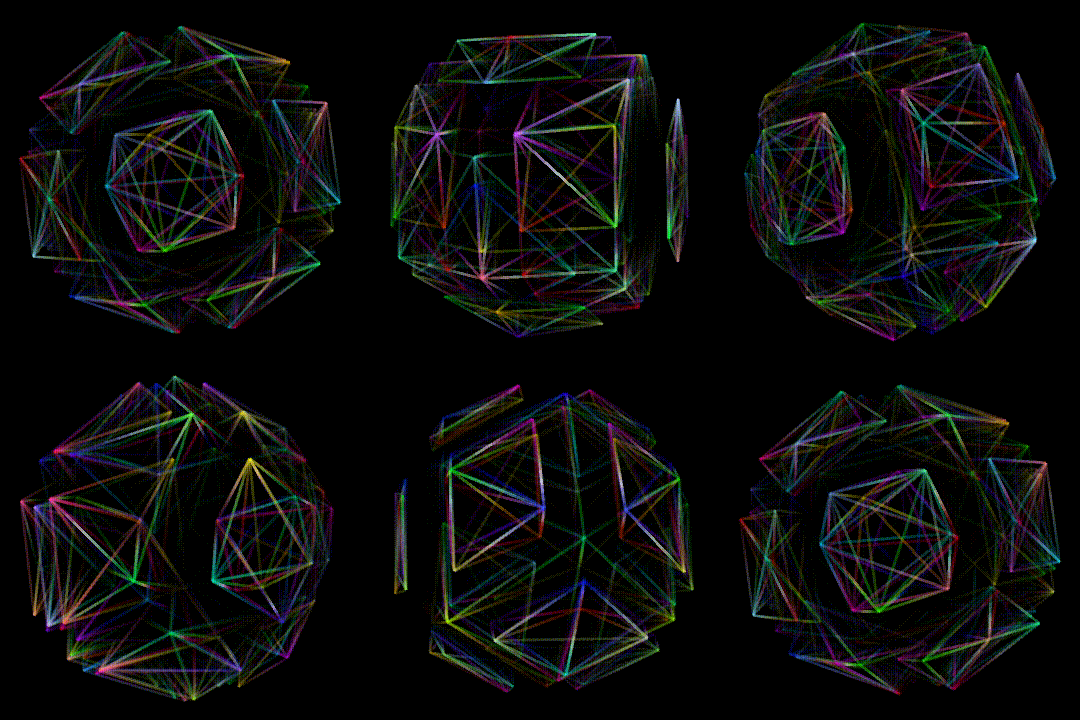
En also shows up in physics randomly in ways I don't understand. I don't know if it's even proven either, but I know some models of the universe use E8 and sometimes even E6 in weird ways.
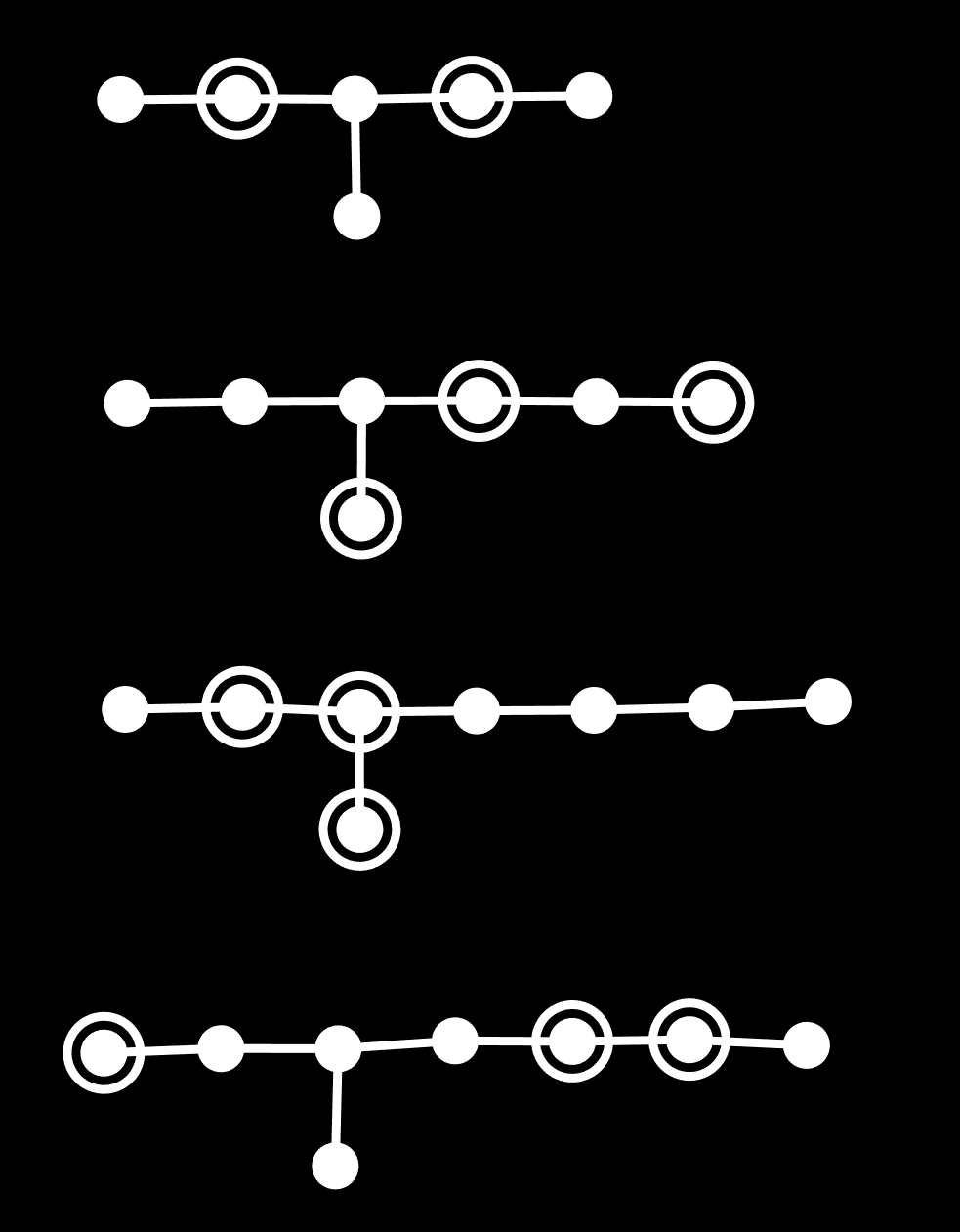
Okay, I ran out of things to say about En. I'll leave you with some Archimedeans to find the facets of. Most En shapes don't have wiki articles so I'll just write the facets.
Chapter 11 - Tilings
This whole page I've been talking about Coxeter Dynkin diagrams that generate finite polytopes, but there are infinite ones too! You might've been wondering if there are any diagrams that don't work, or if there's rules to what you can make. There aren't! Though most diagrams will just be meaningless hyperbolic garbage.
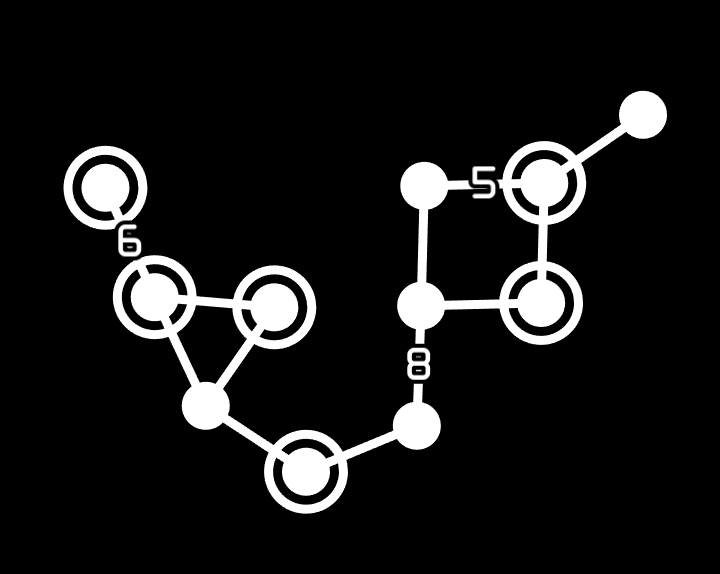
As stated before, linear Coxeter Dynkin diagrams are very similar to Schläfli symbols, so all the familiar regular euclidean/hyperbolic polytopes are representable with CD diagrams. The square tiling is x4o4o, the triangular tiling is x3o6o, the hexagonal tiling is x6o3o, the 16-cell tiling is x3o3o4o3o, etc. What do the mirrors of o4o4o look like?
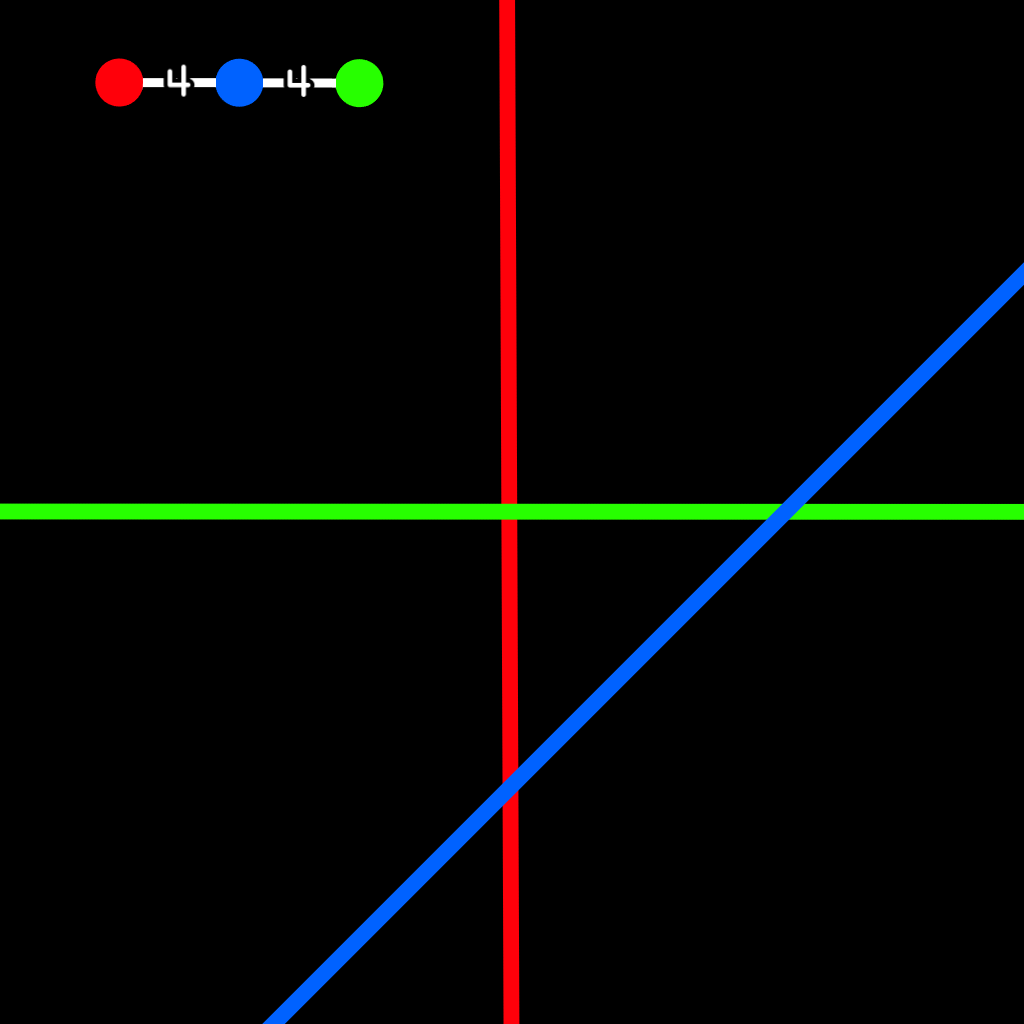
You might think to try 3 lines (lines because while this is rank 3, it's a tiling so it's 2D), all on the same point, with the correct angles. But this doesn't generate anything. What you need is to offset any mirror by any amount to get a valid mirror arrangement. They all generate the same thing just scaled differently, no matter how much you translate each mirror. If this feels gross and arbitrary, it's really no different from how the mirrors intersect in a simplex on a sphere, rather than a point. It's the same, just with the intersection "center" point infinitely far away in the next dimension! This works for hyperbolic stuff too.
Finding facets and vertex figures works the same, in case you were wondering. So you can find that x7o5x for example has heptagons, pentagons, and half symmetry squares. Um, it's right behind me, isn't it?
Okay, so if there's an infinite number of Coxeter Dynkin diagrams for any given rank, how do we decide which are interesting?
One thing we can do is finding all the euclidean tilings, since there are a finite number of wythoffian non prismatic euclidean coxeter systems. We could also find all the regular hyperbolics with spherical facets and spherical vertex figures, these are called compact. There's a finite number of those in each rank, too.
Euclidean Coxeter Diagrams
Let's look at the euclidean ones first. These are called the affine extensions of the Coxeter systems. Below is a chart of all of the families (and I guess Ã1 is a sporadic but shut up), note that the number is based on dimension not rank, so it's a little evil.
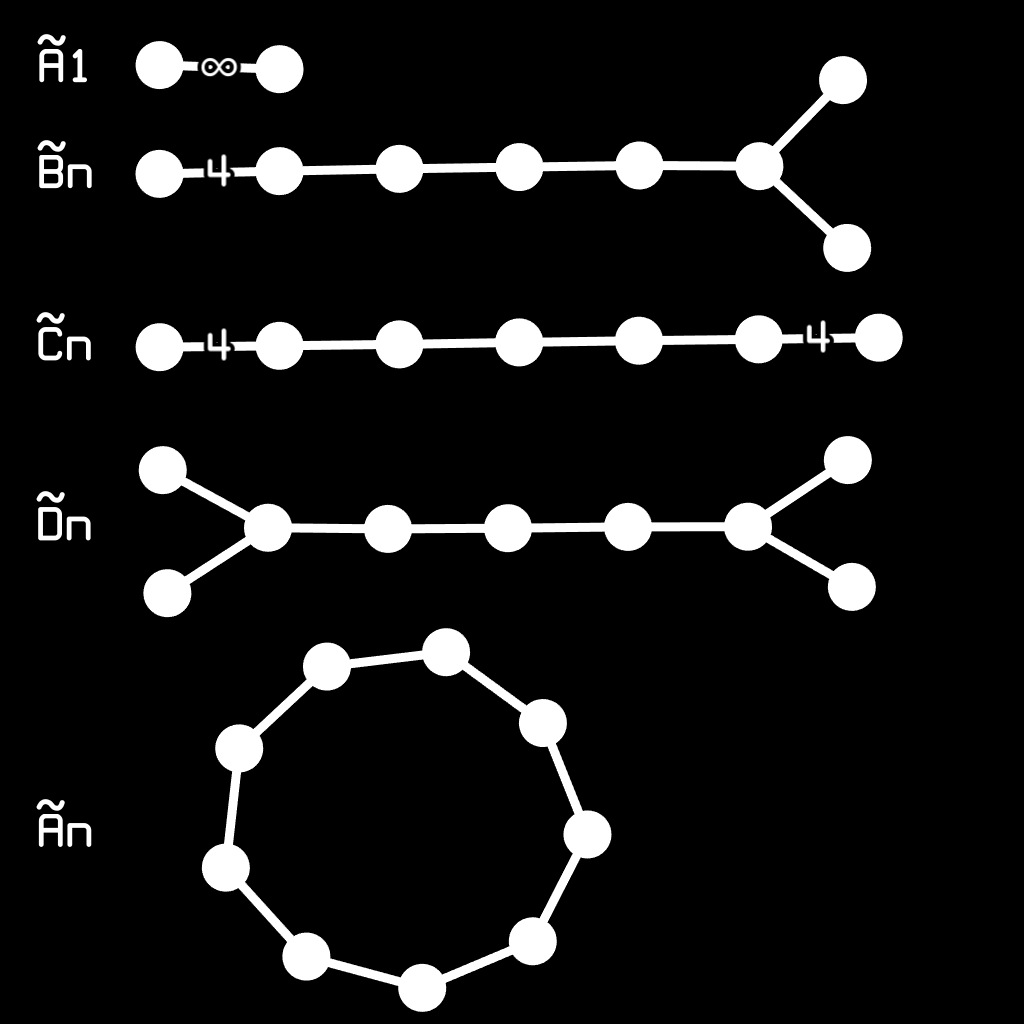
Ã1 or W2 is the symmetry of a regular polygon with an infinite number of sides and edge length 1. Unlike the apeirogon you might be familiar with, which has a circumradius of 1 and looks like a circle, this apeirogon has an edge length of 1, as is standard for uniform polytopes. This makes it the dyadic tiling.
C̃n-1 or Rn is the symmetry of the n-1 cubic tiling. Its symmetry can double, usually into something non wythoffian. If you ring the middle node of R5 you get a 24-cell tiling with lower (R5⨯2, which is non wythoffian) symmetry. 24-cell tiling symmetry is sextuple tesseractic tiling symmetry, not double. I explained this one before B̃n because it's simpler in this order.
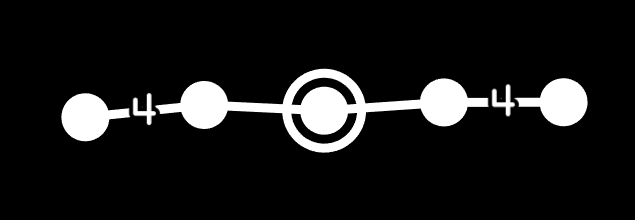
B̃n-1 or Sn is half Rn symmetry. It's the symmetry group of the alternated cubic tiling, which has demicubes and orthoplices.
D̃n-1 or Qn is half of Sn symmetry. Its diagram is very tricky to get to not go super symmetric, because it's a bit more than Coxeter Dynkin diagram symmetry, it's an automorphism group. Which means you can flip the right two nodes without flipping the left two nodes. Anyway, the simplest diagram that doesn't go super symmetric has a staggering 3 ringed nodes!
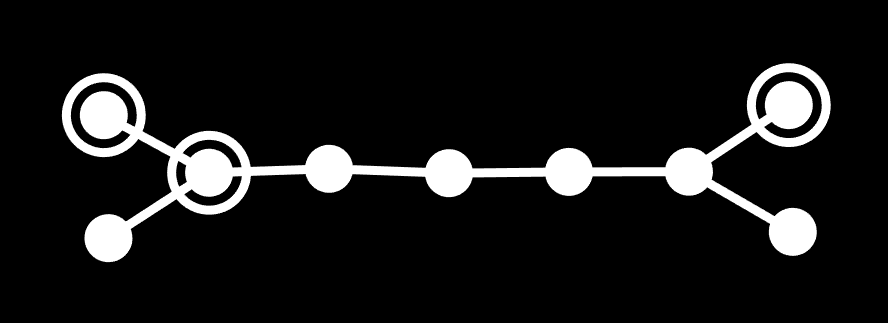
There's actually even more that's cool about Qn's super symmetries, which is that if you ring one node on each fork, the left and right sides are symmetric, but that doesn't correspond to Sn. Sn is where the two sides of one fork are symmetric, and the other fork isn't symmetric. Mapping the two forks onto each other is a new way to double things! I don't know what else to say about it because I can't visualize a 5D honeycomb, which is the minimum to appreciate this symmetry group.
Lastly we have Ãn-1, or Pn. It's a ring of nodes, and is called cyclosimplicial. It's a very beautiful symmetry in my opinion. I really like x3x3o3o3*a. Also, these symmetry groups can multiply really fast. Like the omnitruncate of P5 has P5⨯10 symmetry because pentagons have order 10 symmetry.
Alright time for the sporadics! Did you know that I2(6) also goes by G2? Well, the hexagonal tiling's symmetry is also called G̃2 (or V3) sometimes! I don't get why they didn't just call it G3, but okay. There's also the 24-cell tiling symmetry, o3o4o3o3o, which is called F̃4 as you might've guessed. The other scheme calls it U5. Once again, why not just call it F5?
Before I get into the last 3 sporadics, I want to briefly rant about how much I dislike the standard notation for these. For one, it uses dimension instead of rank, which is extremely confusing because it means that B̃4 has 5 nodes. Secondly, B̃n is half cubic tiling symmetry, despite Bn being being full cubic symmetry?? B̃ and C̃ really should've been swapped, hence why I explained them in that order. Lastly, they used a fucking TILDE for these! Which means that I can't easily type them on discord with my US keyboard, and when typing this webpage I have to type ̃ after every letter to put a tilde over it! Very frustrating. The other scheme is better, but I don't like some of their choices, like V3 over G3, and U5 over F5. Rant over.
The last 3 sporadics are related to En! They aren't as related as the normal En groups though, which is kind of interesting. For each one, you take the original En diagram, and extend one of the ends, and there's only one choice that makes it euclidean, so it's fun to figure out yourself.
Starting with E6, you can put the new node on the 2 branch, but that would just give you E7 which is spherical, so we put it on the 1 branch, giving us Ẽ6 or T7. This diagram has A2 symmetry which is really cool. The hexelte tiling has T7⨯2 symmetry, and the rectified hexelte gamma tiling has T7⨯6 symmetry.
With E7, we have 3 choices. Ringing the 3 branch, again, just gives us the next En which is spherical, but ringing the 1 branch like last time gives us something hyperbolic, not euclidean. You can tell because 3_22 has a hexelte tiling as a vertex figure. So our only choice is to add a node to the 2 branch. This gives us a nice A1 symmetrical diagram, called Eˇ7 or T8. The only notable thing I know about this symmetry group is that 1_33 is a tiling of just septelte gammas, and tilings of just E symmetric polytopes are cool!
Finally we have E8. Adding to the 1 branch gives us something hyperbolic, and adding to the 2 branch does as well. But wait... adding to the longest branch gave us the next En, which is spherical, the last two times. But it's our only option! If we try it, we see that it works, we get something euclidean! This is called Ẽ8 or T9. I'm fine with the other two being called Tn, but this should just be called E9 in my opinion for the same reason I like G3 and F5.
Anyway, there's something cool about the 5_21 polytope specifically! It's a sort of... enneaelte alpha, if you will. As you'd expect, it has D8 8-orthoplices, and 8-simplices. But here's something cool! Every alpha, even the measly rectified 5-cell, has 2 orthoplices and one simplex meeting at every peak. The ditopal angle of the 8-orthoplex is 138.59°, and the ditopal angle of the 8-simplex is 82.81°. 138.59 * 2 + 82.81 = 359.99, so the math checks out, it's euclidean! I don't know I just thought that was cool. I don't have an intuitive understanding of why it's perfectly euclidean, as opposed to slightly spherical or slightly hyperbolic.
Okay, so that's all the non prismatic euclidean Coxeter systems! Time for the compact hyperbolics. This will feel pretty similar to trying to find platonic solids by going through each one and folding them up into the next dimension.
Regular Compact Hyperbolic Tilings
Starting with rank 3 tilings, every Schläfli symbol of two integers {a, b} where 1/a + 1/b < 1/2 is a compact hyperbolic tiling because all regular polygons are spherical. (Excluding the apeirogon)
Moving up to rank 4, things get interesting. Starting with the tetrahedron, since we're only interested in convex regular compact hyperbolic tilings, our first non spherical choice is 6 around an edge, but that gives us a triangular tiling vertex figure.
Next up are cubes, folding 5 around an edge gives us an icosahedral vertex figure, so that works, {4, 3, 5} is our first compact hyperbolic tiling! Folding 6 around an edge gives us yet another triangular tiling vertex figure. Actually, since 6 never shows up in sphericals besides {6}, we can exclude that from future searches.
Octahedra! Folding 3 around an edge is spherical, and folding 4 has a square tiling verf.
Dodecahedra. Folding 3 around an edge is spherical, and 4 gives us an octahedral vertex figure, so {5, 3, 4} is our second compact tiling! It's actually the dual of the first. Folding 5 around an edge gives us an icosahedral vertex figure, so {5, 3, 5} is compact too. It's palindromic and therefore self dual.
Finally we have icosahedra. Folding 3 around an edge is hyperbolic, with a dodecahedral vertex figure. {3, 5, 3} is compact, and self dual. Folding 4 has an order 4 pentagonal tiling vertex figure, which isn't even euclidean, so definitely not compact. That means we've found all the regular compact hyperbolic polychora!
Time for the regular compact hyperbolic 5-polytopes. The 5-cell can be folded 5 around an edge to get {3, 3, 3, 5}, which is the 5D analog of the 600-cell.
The tesseract can fold 3 around an edge to be spherical, 4 to be euclidean, and 5 to be hyperbolic. The tesseract's vertex figure is the tetrahedron, and 5 tetrahedra to an edge is spherical, so {4, 3, 3, 5} is compact!
Next we have the 16-cell. It has an octahedral vertex figure, so we can only hope to fold 3 around a face, but that's the euclidean 16-cell tiling.
Next we have the 24-cell. It has a cubic vertex figure so we can only hope to fold it 3 around a face, but that's the euclidean 24-cell tiling.
The 120-cell has a tetrahedral vertex figure, so we can fold it 3, 4 and 5 around a face. That gives us {5, 3, 3, 3}, {5, 3, 3, 4}, and {5, 3, 3, 5}. That's a lot of compact tilings! The first one is a 120-cell analog.
Lastly, we have the 600-cell. We can't do anything with this as its vertex figure is not the facet of any convex finite regular. So we have the 120-cell and 600-cell analogs, the order 5 tesseractic tiling and its dual, and the order 5 120-cell tiling. Nice collection, 5 is more than the 4 we got for polychora!
For every higher rank, 5 stops working, so all we're left with is 3s and 4s, and there's no way to combine those to get more compact hyperbolic honeycombs. So that's all of them. An infinite amount for rank 3, a dual pair and 2 self duals for rank 4, and 2 dual pairs and a self dual for rank 5.
Conclusion
Coxeter Dynkin diagrams are an incredibly elegant way of writing most uniform polytopes. They're only really thought of as intimidating because they're hard to explain, but they're really intuitive and easy to use once you learn them. I really hope this webpage helps people learn Coxeter Dynkin diagrams.
People like to use really bad names for polytopes and it infuriates me. Using Coxeter Dynkin diagram derived names is much simpler for wythoffian convex uniforms. Check out my naming schemes if you want to join the revolution: Numerical Ringed Scheme - N op Naming Scheme
I used the Coxeter Dynkin Diagram Playground to make all the CD diagrams in this webpage. I plan to make a non silly version of the program Eventually™.
Thank you for reading! If you have any questions, comments, or corrections, please email me or send me a DM on Discord. Both can be found on my homepage.